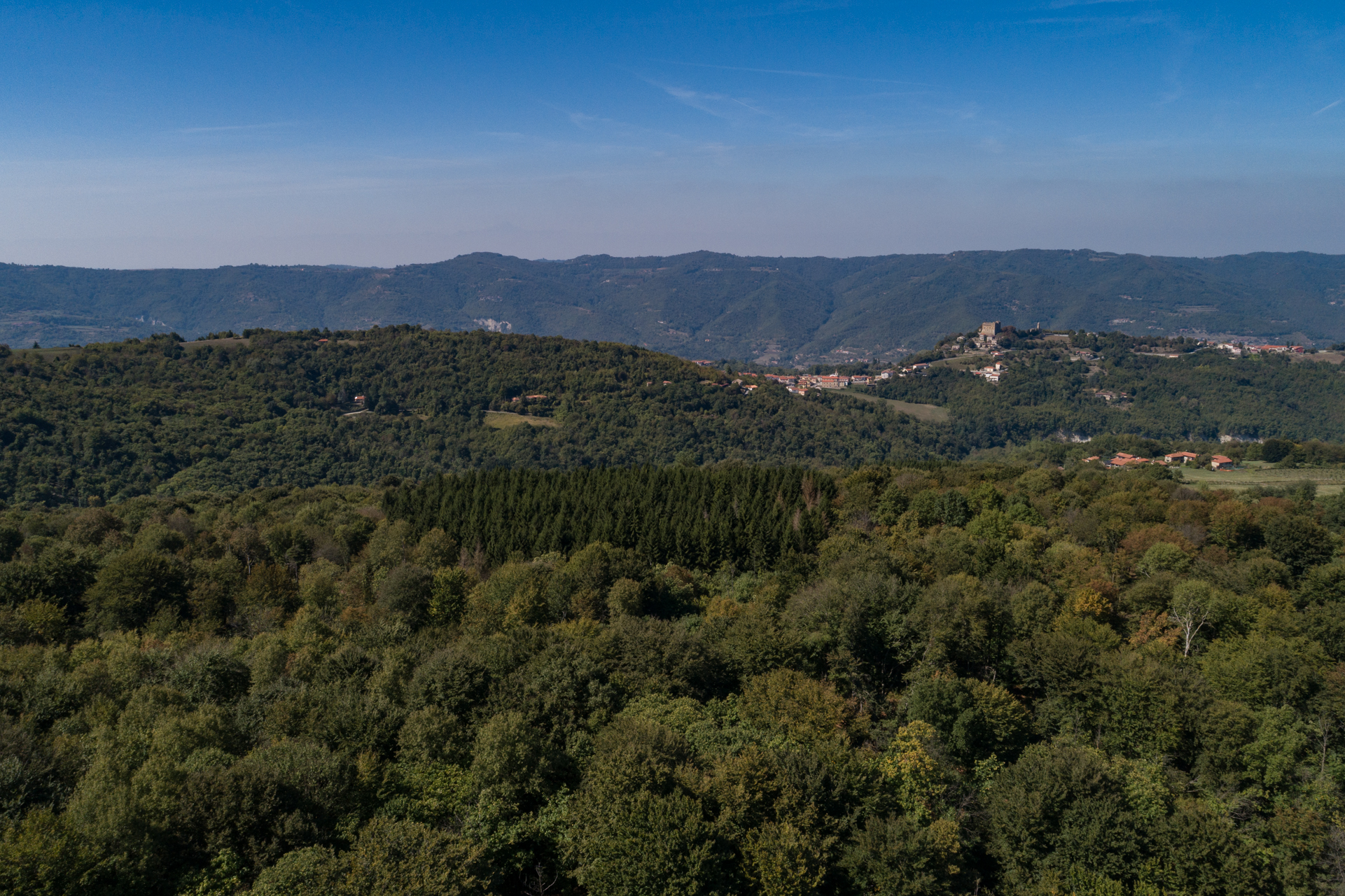
The village lies in the highest part of the Alta Langa, surrounded by hazelnut and chestnut groves, overlooking the Bormida valley below.
It is a small place, surrounded by greenery, where the landscape is more densely forested and therefore more shady than the vineyard-covered hills further to the north. The altitude provides fresh air and vast horizons. But up here, it is the main square that defines the village’s identity. Gottasecca is still home to an ancient and impressive sport: balon, also know as ‘pallapugno’, is a traditional game of the Langhe region that requires skill, strength, strategy, and gambling.
Once upon a time, all village squares were playgrounds, and even today, when a match happens in the village, it becomes an event. The ricochet of the ball against the houses, the silence before the serve, the crisp thump of the fist: these are sounds that are part of the collective memory.

Felice Bertola, one of the greatest champions of this sport, was born here, at a time when balon was not just a game, it was a popular part of the local culture. His name stands alongside Augusto Manzo, from Santo Stefano Belbo, in the annals of the sport. In Gottasecca, the game represents a shared history and identity.
The square also houses a bust of the 19th century poet Amedeo Ravina, a cultured and passionate figure who linked the town to a period of new ideals and cultural ferment. Just above the town are the ruins of the tower, a reminder of the past that still marks the village’s skyline.
The church in the forest
Outside the village, isolated in the silent forest, lies the Sanctuary of Maria Vergine Assunta. A serene place that invites quiet contemplation among the trees and paths.