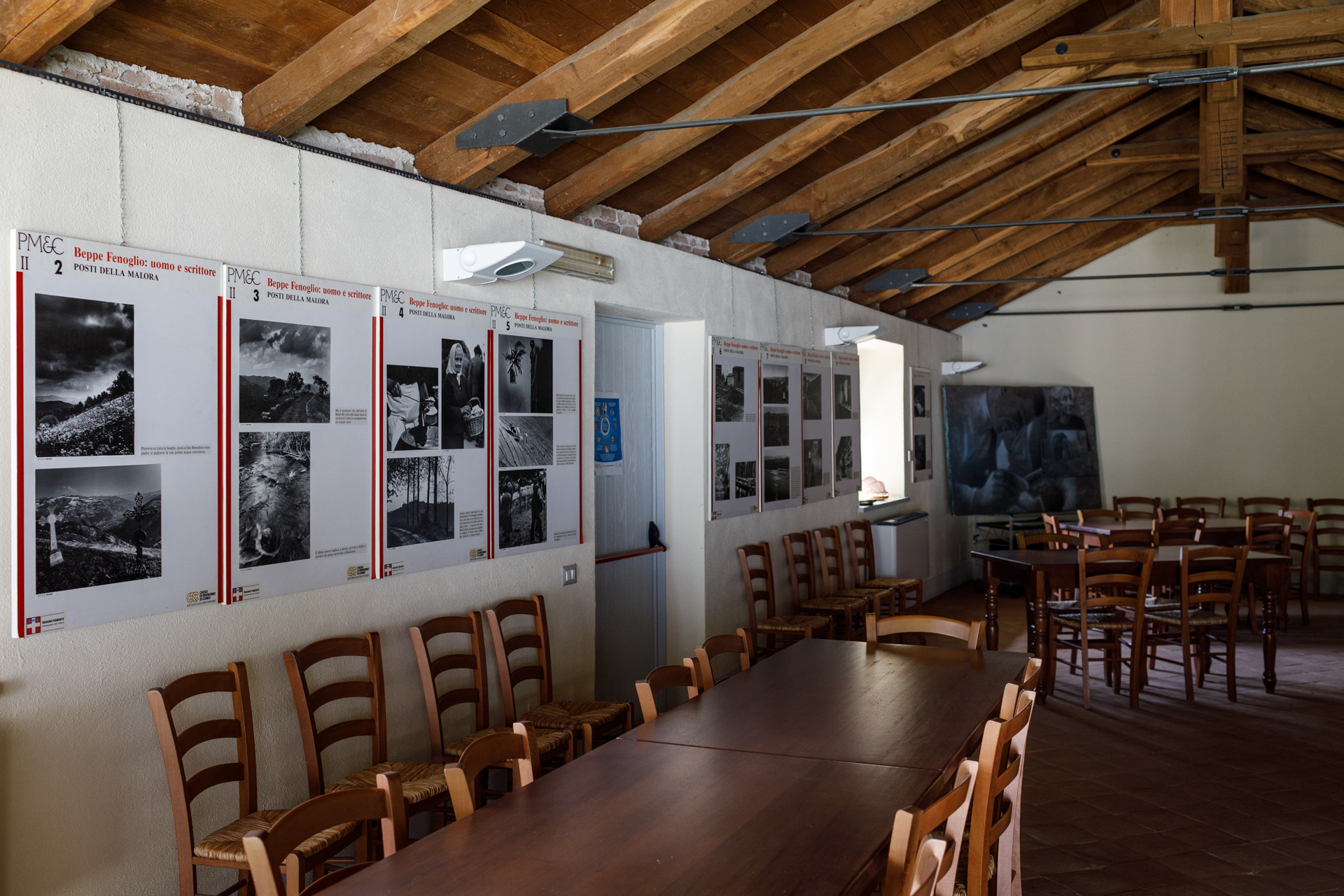
In Castino, Beppe Fenoglio's Langhe are more than just a literary landscape: they are the ridges, valleys, farms, and roads actually traversed during the Resistance. The writer, who experienced the partisan war firsthand, transformed these places into a moral geography of choices, fear, loyalty, and the desire for freedom.
The village and hamlet of San Bovo appear on the horizon of The Partisan Johnny . From the ridge between the Belbo and Bormida valleys, the view helps us understand why these hills were simultaneously a refuge, a connection point, and a difficult territory to control. Not far away, the Pavaglione area recalls the harsh and poor peasant world described in La malora .

Walking inside the story
The experience can unfold as a literary stroll through Castino, San Bovo, and the Fenoglio trails in the area. Stops become opportunities to read short passages, reconstruct episodes of the partisan struggle, and recognize the recurring elements of Fenoglio's writing in the landscape: exposed ridges, ravines, mud, isolated farmhouses, and the distance between villages.
No prior knowledge of the novels is necessary. This journey allows you to approach the writer through his places and understand how his dry, anti-rhetorical language captured the Resistance without turning it into legend. At the same time, the literary narrative offers a key to understanding rural life in the Alta Langa and its transformations.
The itinerary can be adapted to your available time and undertaken independently on marked trails or with a guide. Before setting out, it's a good idea to check the route, terrain, weather, and any access restrictions; reading material and visits to specific areas should be arranged in advance.