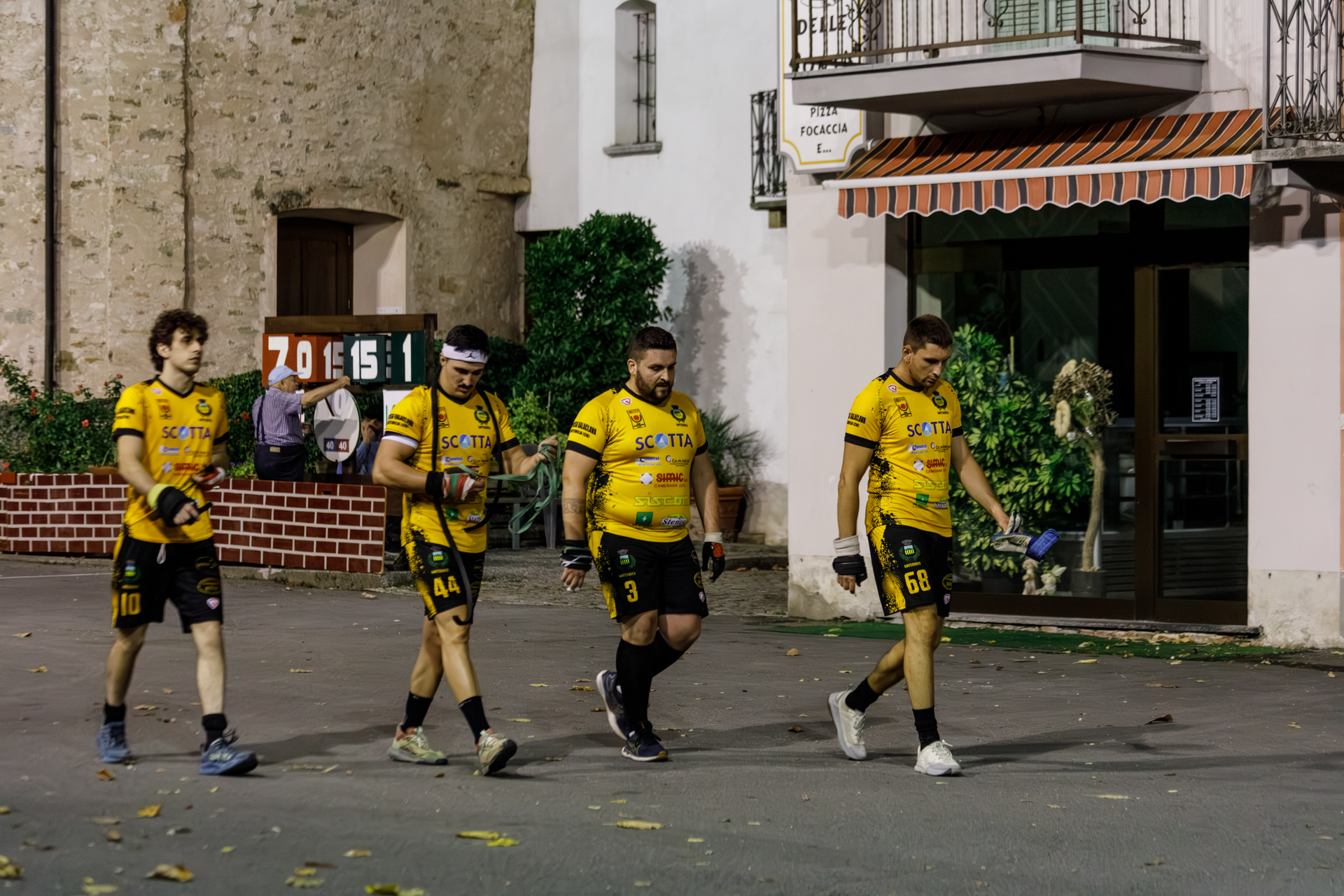
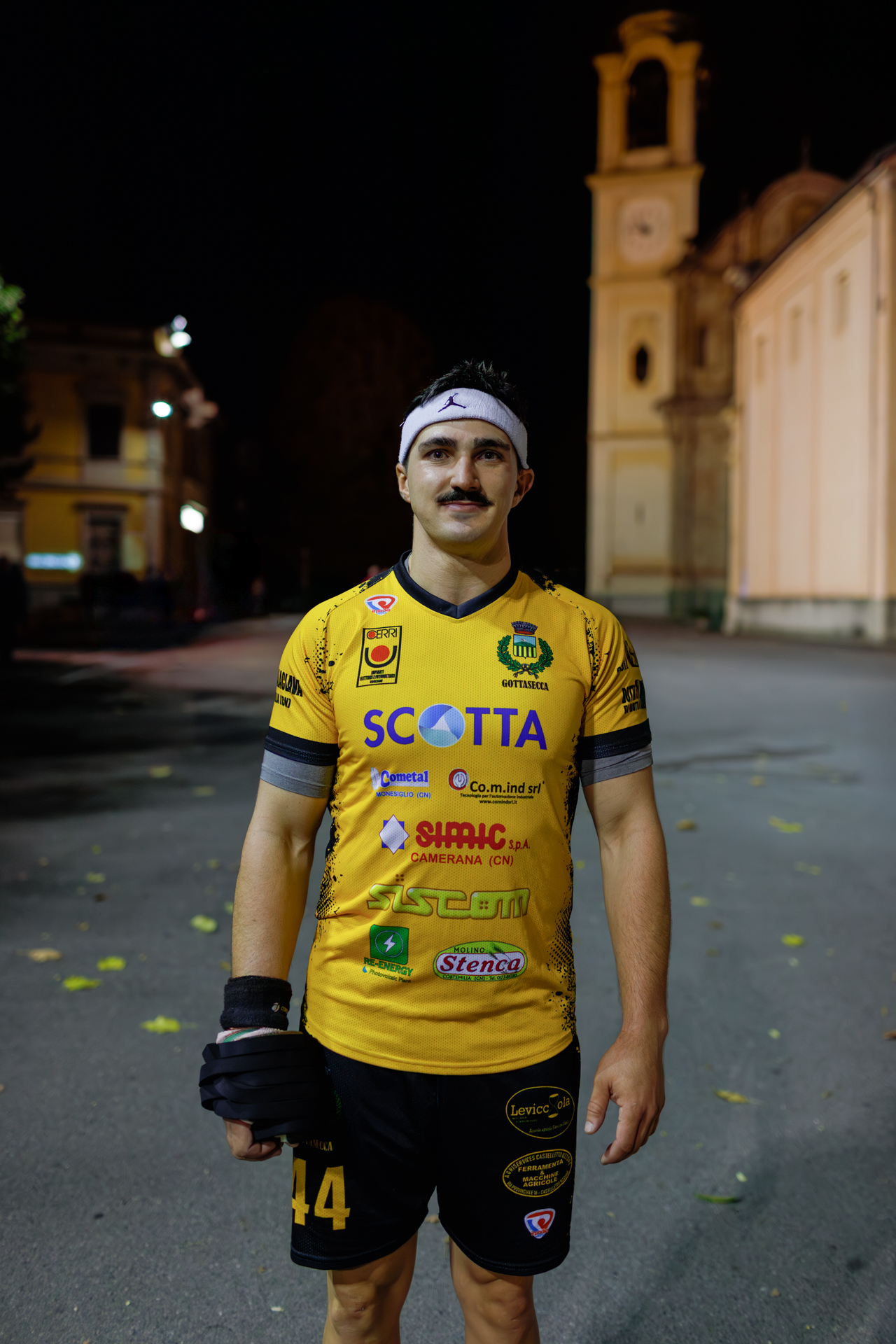
Pallapugno is one of those traditions in the Bormida Valley that can only be truly understood in person. Knowing how it works isn't enough. You have to feel the hit on the wall, follow the trajectory of the ball, see how the crowd lines the court, and how the villagers around it change their voices. In Piedmont, it's recognized as one of the region's traditional sports, with historical roots spanning Lower Piedmont and Western Liguria.
Here the game is not just competition.
It's a civil rite, a returning habit, a concrete way of being together.
A game born in the territory
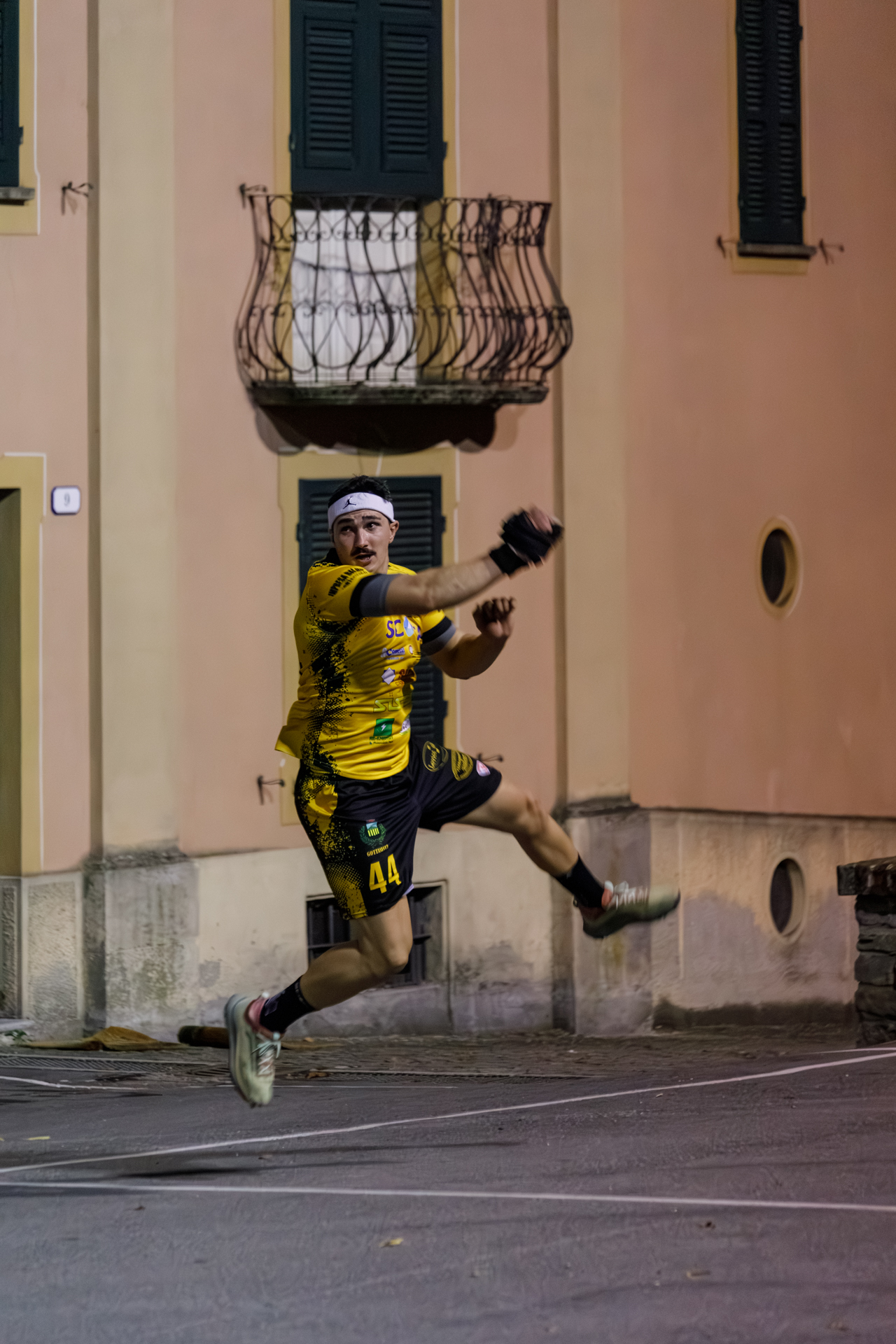
Its strength lies in this: pallapugno never seems abstract or transferable everywhere in the same way. It requires a specific space, a local lexicon, a community that recognizes it. Teams are made up of four players, the playing field is the sferisterio , 90 meters long and 16 meters wide, and the ball is struck with a fist protected by a bandage. These are technical details, of course, but they also speak to an ancient, essential gesture that has remained true to itself.
The sferisterio and the square
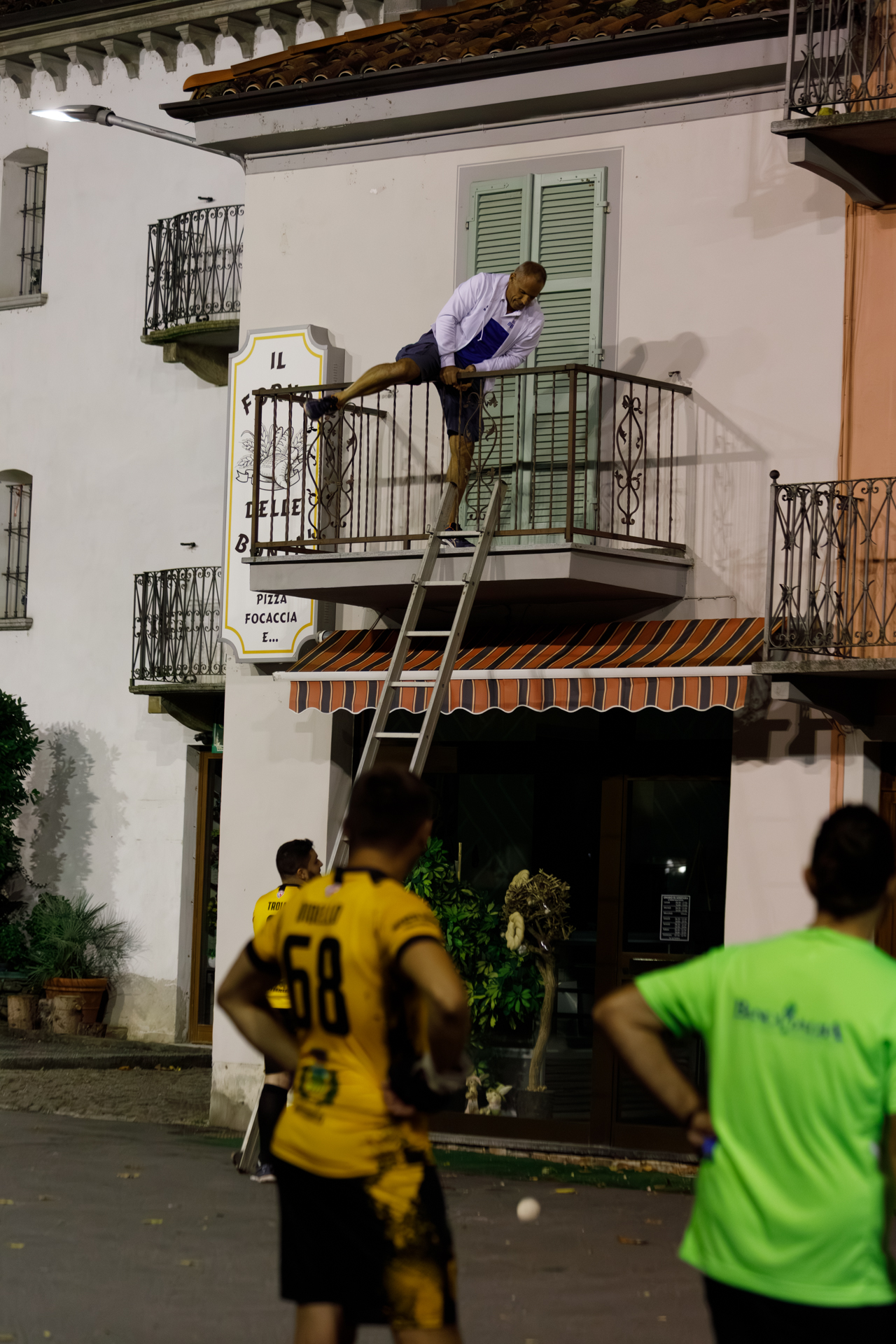
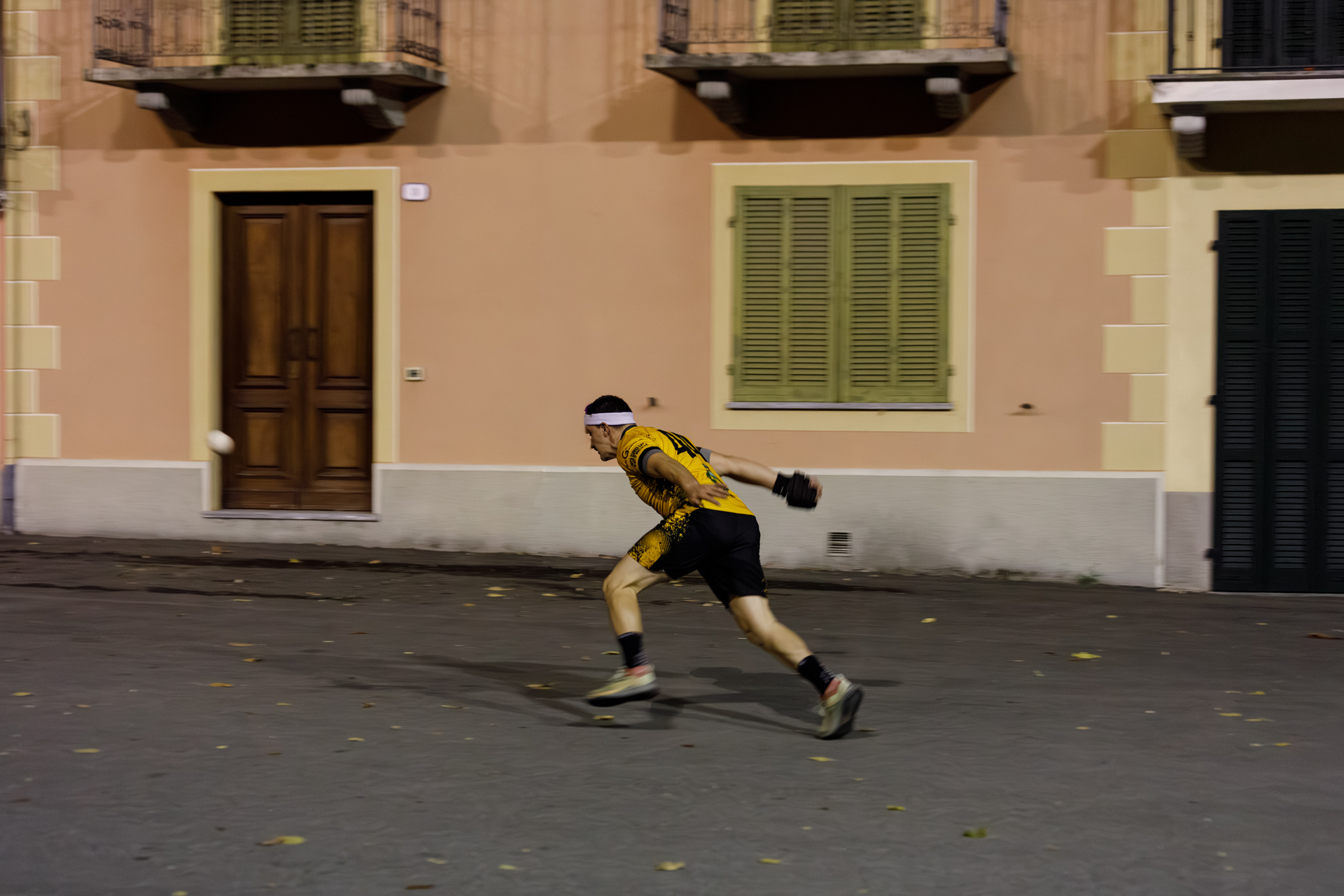
Alongside the more well-known form, there's also the pantalera , a variant even more closely tied to the towns. In this case, the ball is not struck from the fist, but from a wooden structure, and the game can take place in the open spaces of town squares, among houses, rooftops, balconies, steps, and irregular bounces. It is perhaps here that pallapugno most clearly demonstrates its territorial nature: the court is never neutral, because it interacts with the architecture and the very shape of the town.
In the Bormida Valley, this tradition isn't just a memory. In Monastero Bormida and Spigno Monferrato , the sferisteri still exist, are listed as functioning facilities, and continue to give substance to this practice today. This is an important detail, because it distinguishes a recounted tradition from a lived tradition.


For those arriving from outside, attending a match means entering, for a moment, a different dimension of local time. There's no postcard folklore. There's a form of continuity. Pallapugno combines athleticism, collective memory, and the human landscape. And it demonstrates, with simplicity, that in the Bormida Valley, some traditions don't require much explanation. Above all, they demand to be seen.