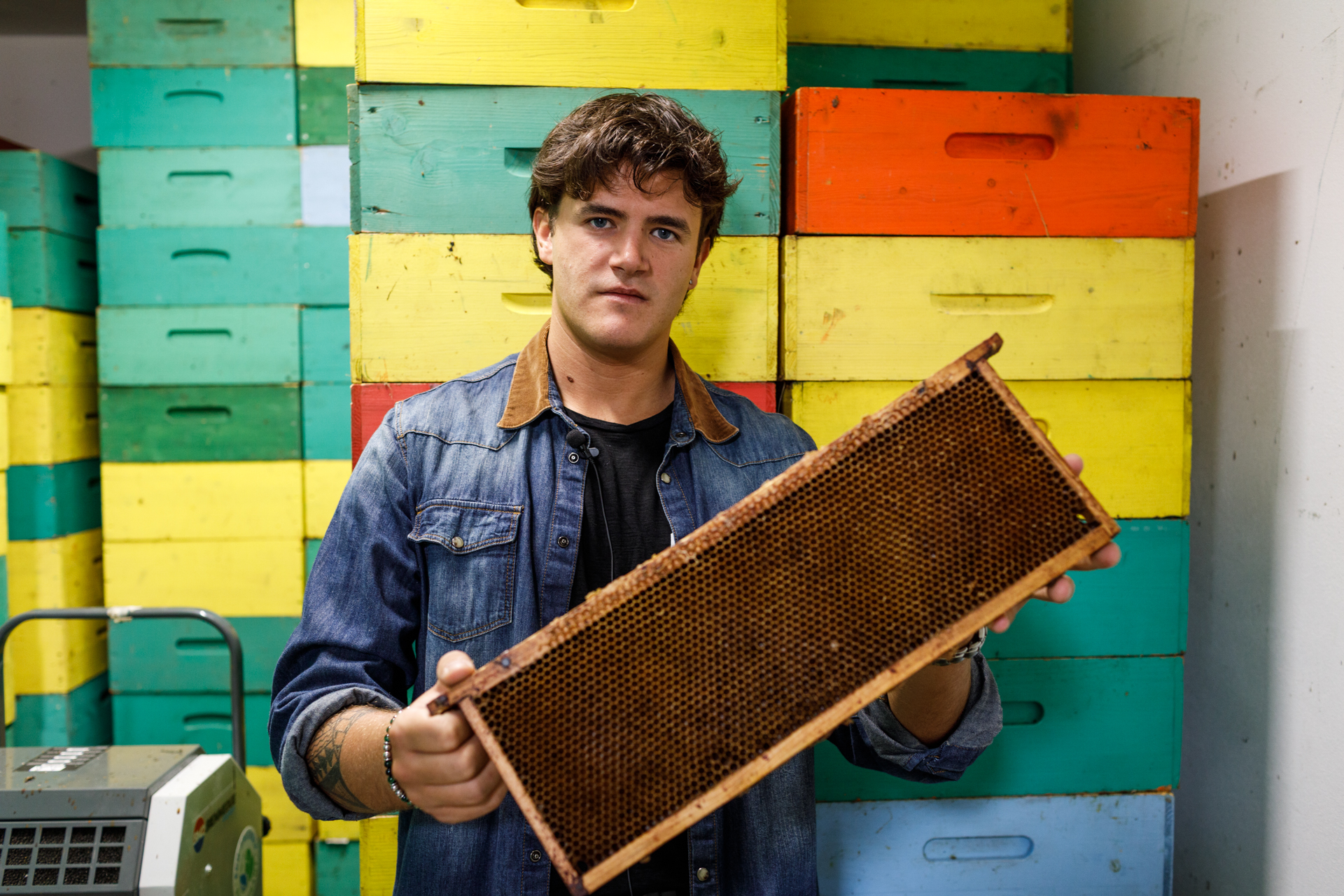
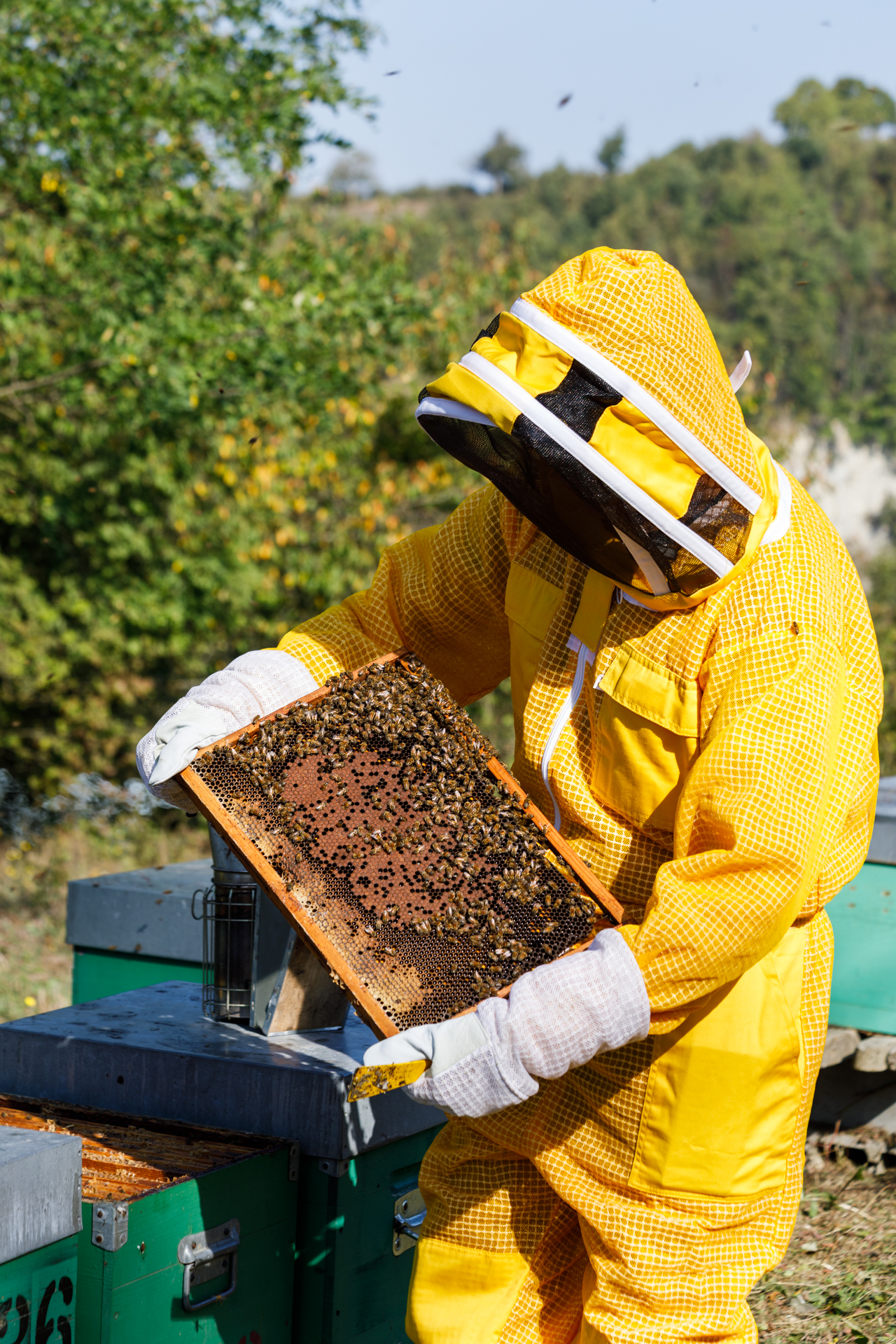
Observing a beehive means realizing how much every flower, every season, and every forest contribute to building a balance.
In the Bormida Valley, honey speaks precisely of this: a region still capable of offering an extraordinary variety of natural environments, where the work of the bees complements that of the beekeepers and restores, jar after jar, the authentic character of the hills.
A landscape that changes with the seasons
The honey of the Bormida Valley comes from a richness that often goes unnoticed. Chestnut groves, permanent meadows, clearings, acacias, lime trees, fruit trees, and a wide variety of wild plants create a natural mosaic that accompanies the bees' work from spring until late summer.


In the higher areas of Camerana, Mombarcaro, Prunetto, Gottasecca, and Castelletto Uzzone, where the woods become more extensive and agriculture leaves more room for spontaneous vegetation, biodiversity is one of the most precious elements of the landscape. Here, bees find diverse environments within a few kilometers, and each season brings with it new blooms, new shades, and new scents.
It's precisely this variety that makes each honey unique. There isn't a single expression of the valley, but rather a continuous relationship between climate, altitude, blooms, and time.
The invisible work of bees
Beekeeping requires attention, patience, and a deep knowledge of the environment.
The hives follow the rhythm of the seasons and each intervention seeks to respect the delicate balance of the colony, leaving the bees to do what they have always known how to do.
Behind every jar lies more than just food. It's the silent work of thousands of bees and people who know these hills intimately, observing them day after day and nurturing their balance without forcing it.


A product that tells the nature of the valley
Tasting honey means experiencing one of the most authentic aspects of the Bormida Valley: its biodiversity. It's a product that preserves a direct connection to its place of origin and allows you to recognize, through its taste, the diversity of a still unspoiled landscape.
For those who choose to live here, honey also becomes a symbol of a different relationship with the land. Farms are often small family-run businesses, nestled in a landscape where agriculture, forestry, and nature coexist seamlessly. Buying directly from a beekeeper means learning about a story, a particular vintage, a particular bloom, and understanding how the value of this product depends on the balance of the surrounding environment.
It's a daily routine made up of simple gestures, yet deeply rooted in the place. And perhaps this is the most precious quality of Val Bormida honey: a reminder that nature doesn't produce quickly and that the best things continue to grow in their own time.
Each honey preserves the memory of the flowers the bees have encountered and the landscape that made them grow.