The Chapel of San Rocco stands just outside the center of Levice, along the road connecting the town to the Bormida Valley and the provincial road leading to Bergolo and Prunetto. Its location recalls the passage of merchants, pilgrims, and travelers along the ancient roads of the Langa.
The building's origins are medieval. According to one of the most accredited historical reconstructions, the chapel may coincide with the ancient parish church of San Donato, built outside the town. Between the late sixteenth and seventeenth centuries, the church was dedicated to San Rocco and underwent structural transformations.
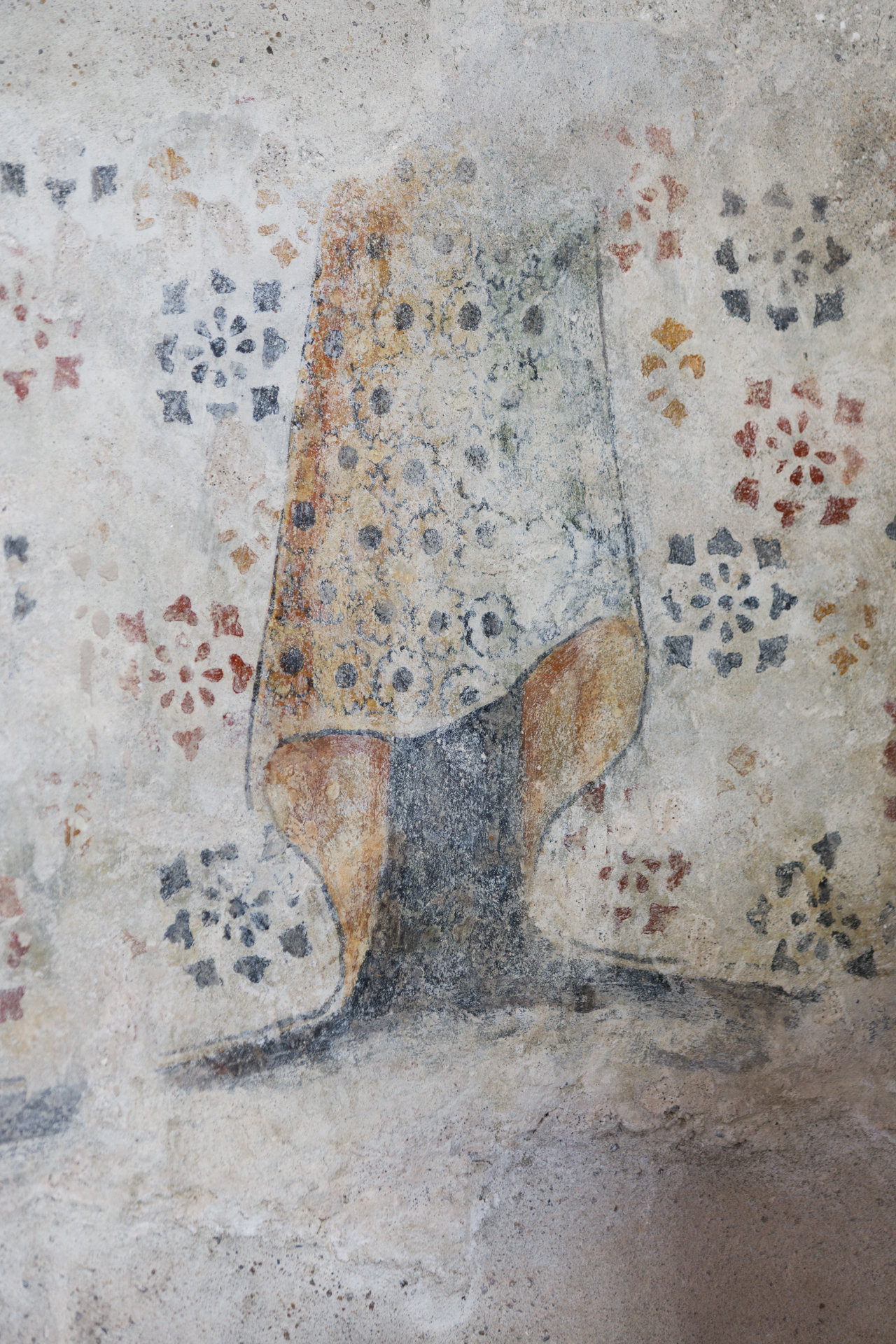
The architecture is simple and intimate, but the apse preserves an important cycle of frescoes from the early 16th century . The images combine late Gothic elements with a new Renaissance focus on space, figures, and composition.
What to see
On the outside, note the simple stone façade, once preceded by a portico, and the small bell gable. The interior consists of a single rectangular hall ending in a semicircular apse.
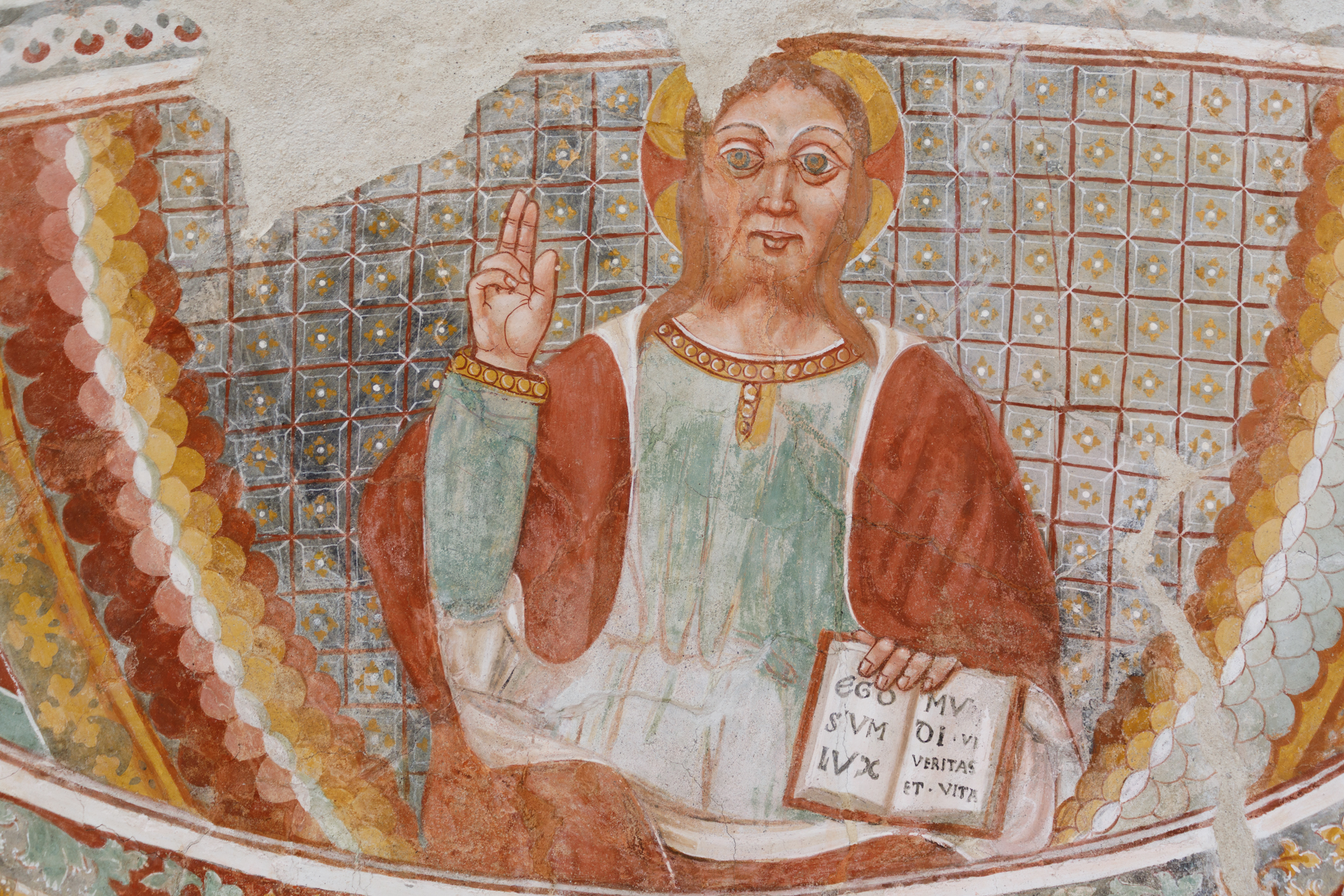
In the apse, Christ Pantocrator stands out, seated on a throne with the Gospel open and his hand raised in blessing. A vegetal frame separates this image from the lower register, organizing the decoration as a small sacred scene.
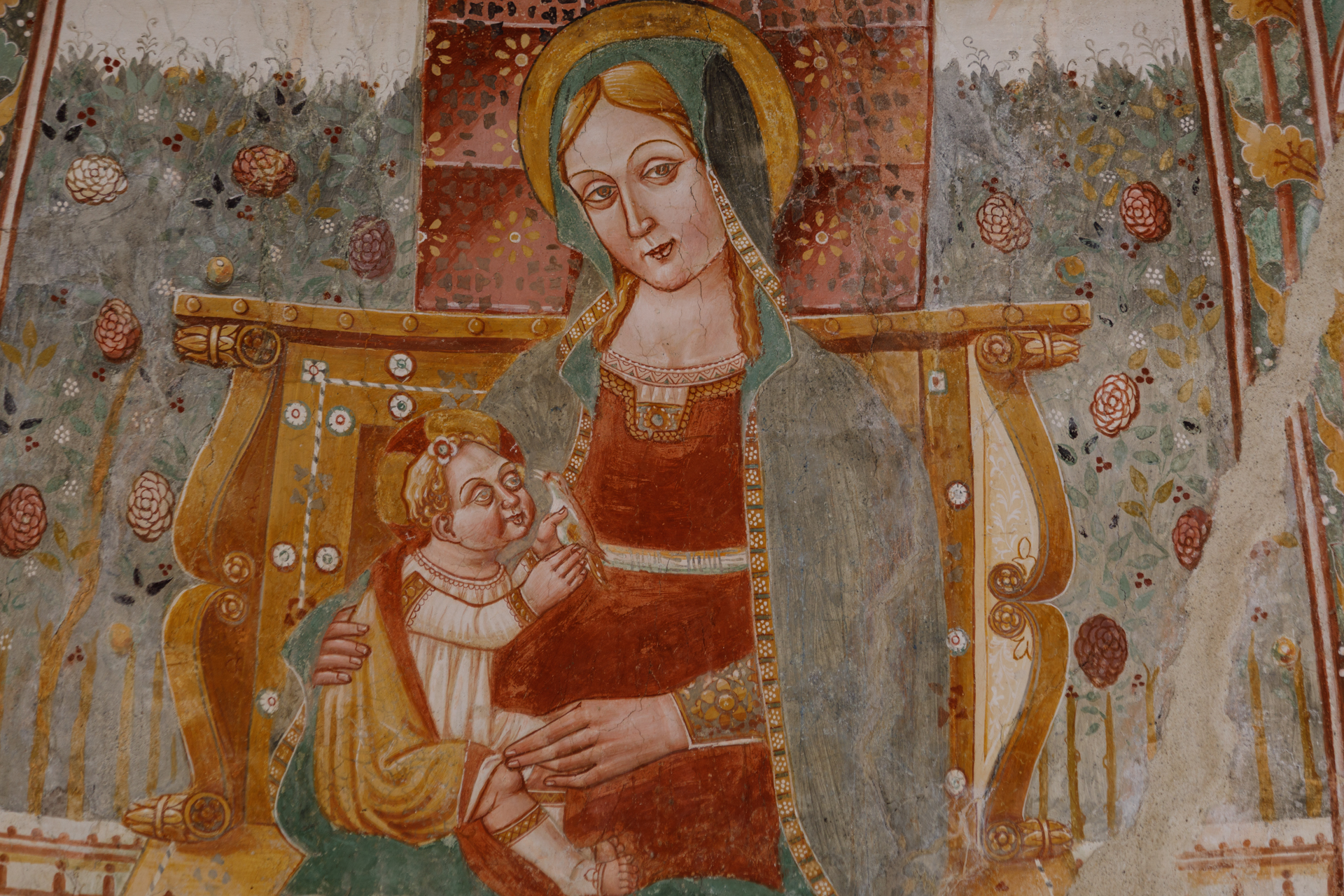
At the center of the lower band is the Madonna and Child , seated on a throne before a rose garden. On the sides are depicted Saint Roch and Saint Sebastian, traditionally invoked against the plague, along with Saint Joseph and Saint Lucy. The Del Carretto coats of arms and the initials present in the frescoes likely link the commission to Raffaello Del Carretto, who was enfeoffed in Levice at the end of the 15th century.
Pay attention to the attributes that allow you to recognize the characters: Saint Roch wears pilgrim's clothing and displays the wound of illness, Saint Sebastian is pierced by arrows, while Saint Lucy bears the symbol associated with her martyrdom. The figures recount the fears, hopes, and forms of religious protection of medieval and Renaissance communities.
The chapel also houses an altar built in 1632 , evidence of the transformations that took place in the 17th century. Accessibility to the interior may vary: before visiting, it is advisable to contact the Municipality of Levice or the parish to confirm opening times and entry procedures.