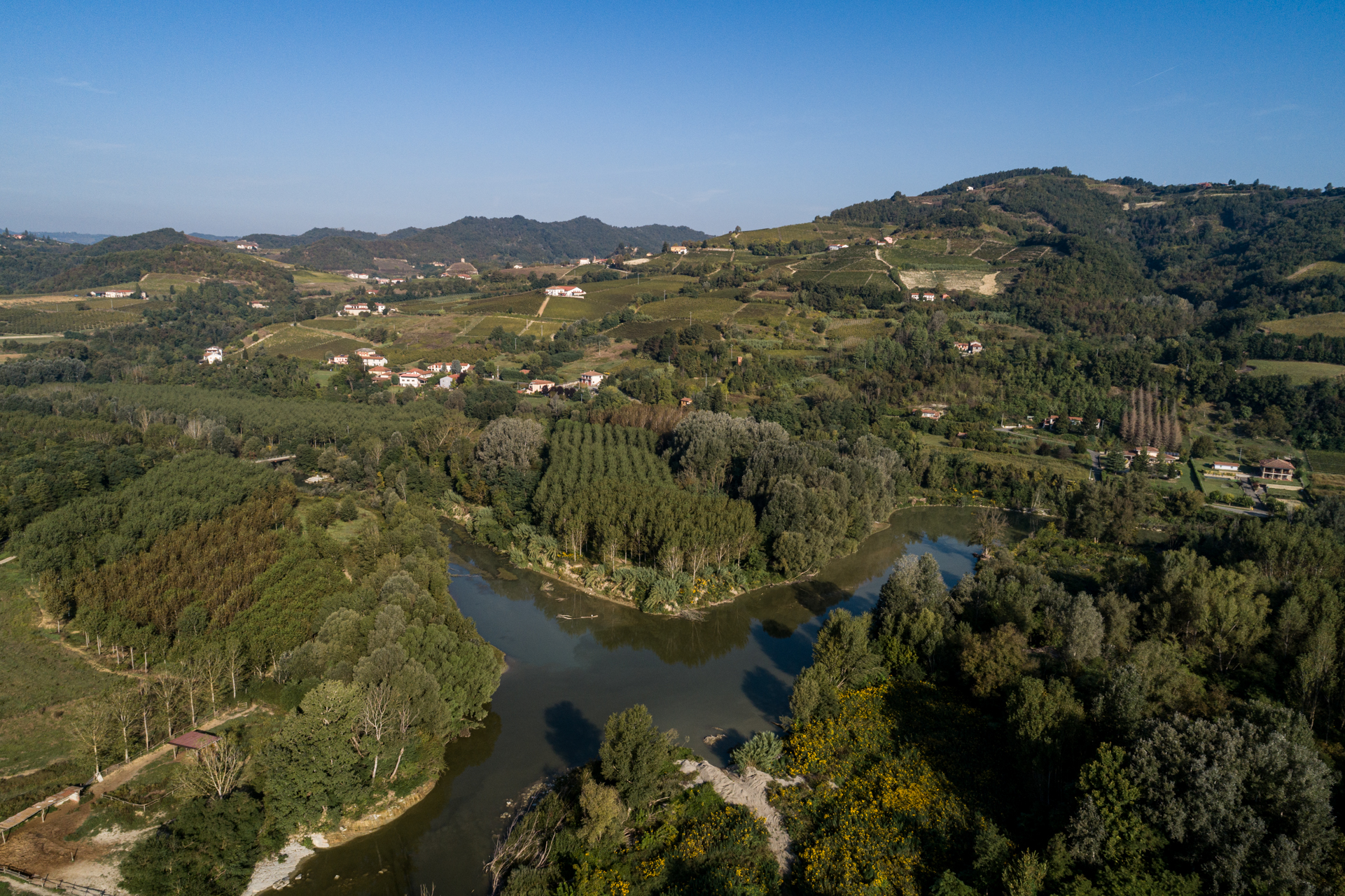
Bistagno appears relaxed, in harmony with the rhythms of the valley. Here there is more space, the landscape breathes, and the town has grown in a different way from the hilltop villages: less compact, more open, built on movement and relationships.
It did not grow out of isolation, it was shaped by major trade routes and connections. This character is still evident today, reflected in the larger spaces, the more open structure, and the direct connection with the river.


The Bormida river is a constant presence following past the town. It is not just part of the landscape, it is part of the town, marking its boundaries and dictating the rhythms of life.
Walking through the town, everything seems to go with the flow.
Plaster as art and history in the valley The Giulio Monteverde Gipsoteca is dedicated to the Bistagno-born sculptor and houses his plaster works, documenting his main period of activity from 1970 to 1917. A place which shows art in its purest form: pale surfaces, hanging blocks, and details left open, where the artist’s actions are still visible.