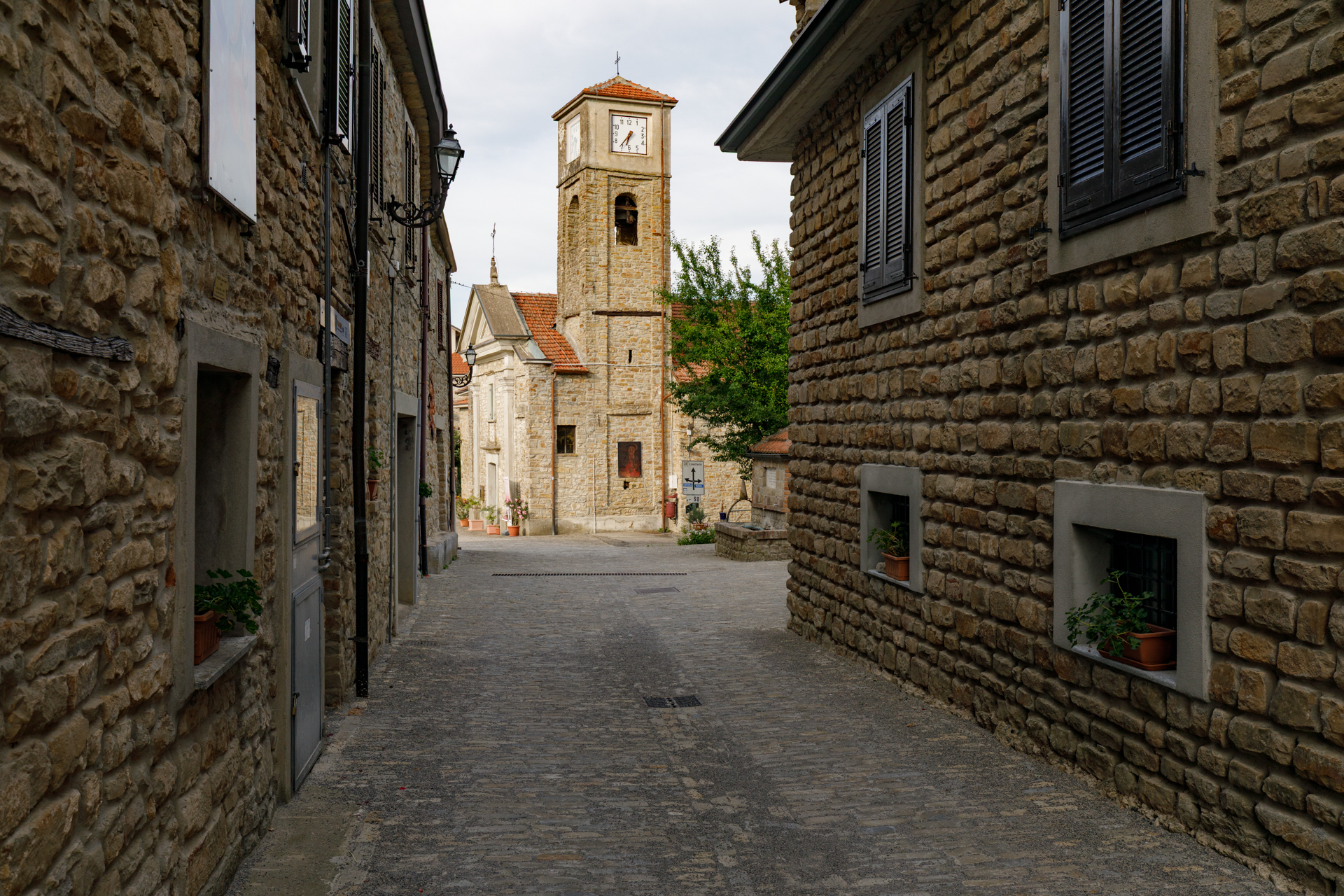
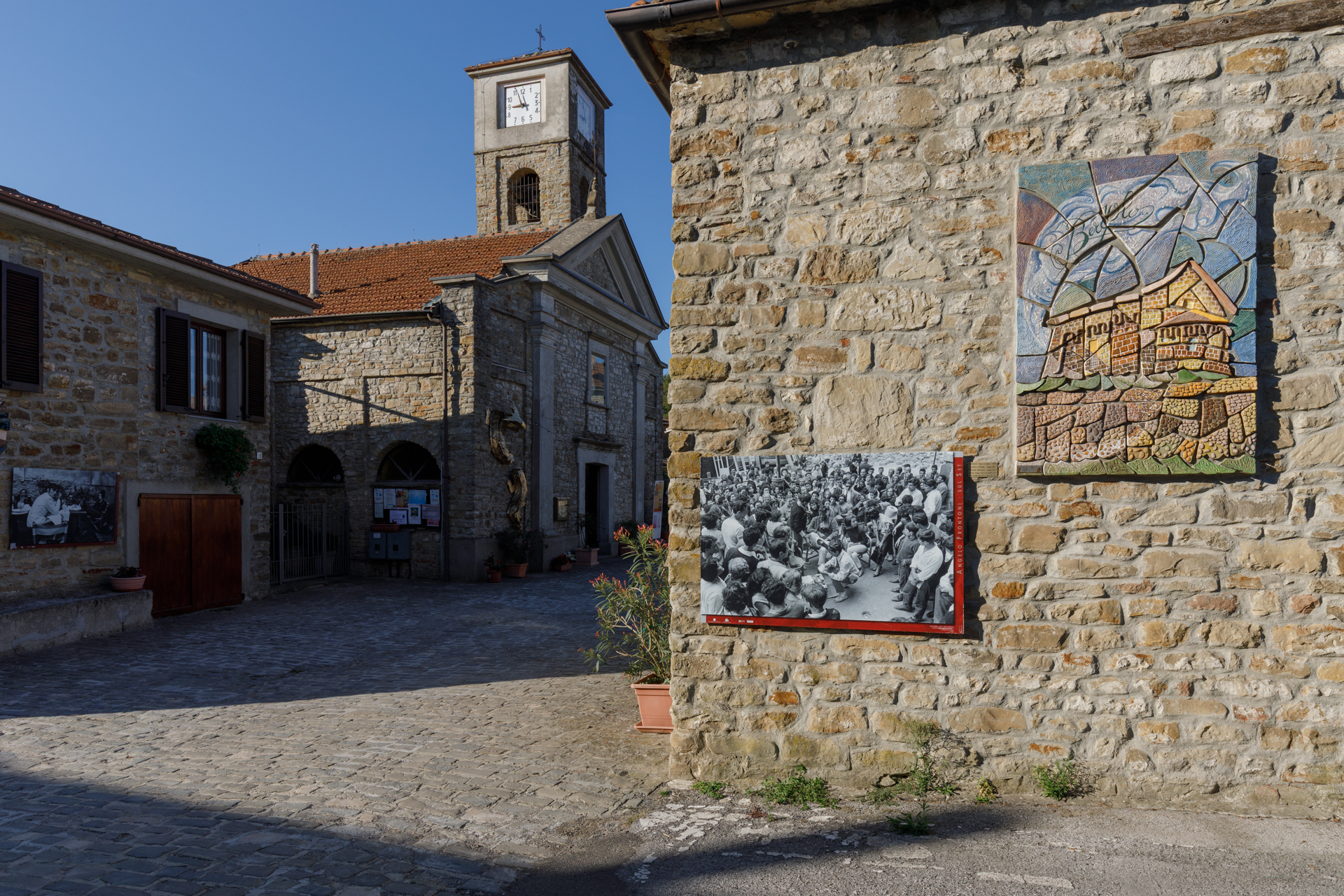
Bergolo appears to have been carved out of the living rock. The village is built entirely of sandstone, a material that unites architecture, landscape, and time.
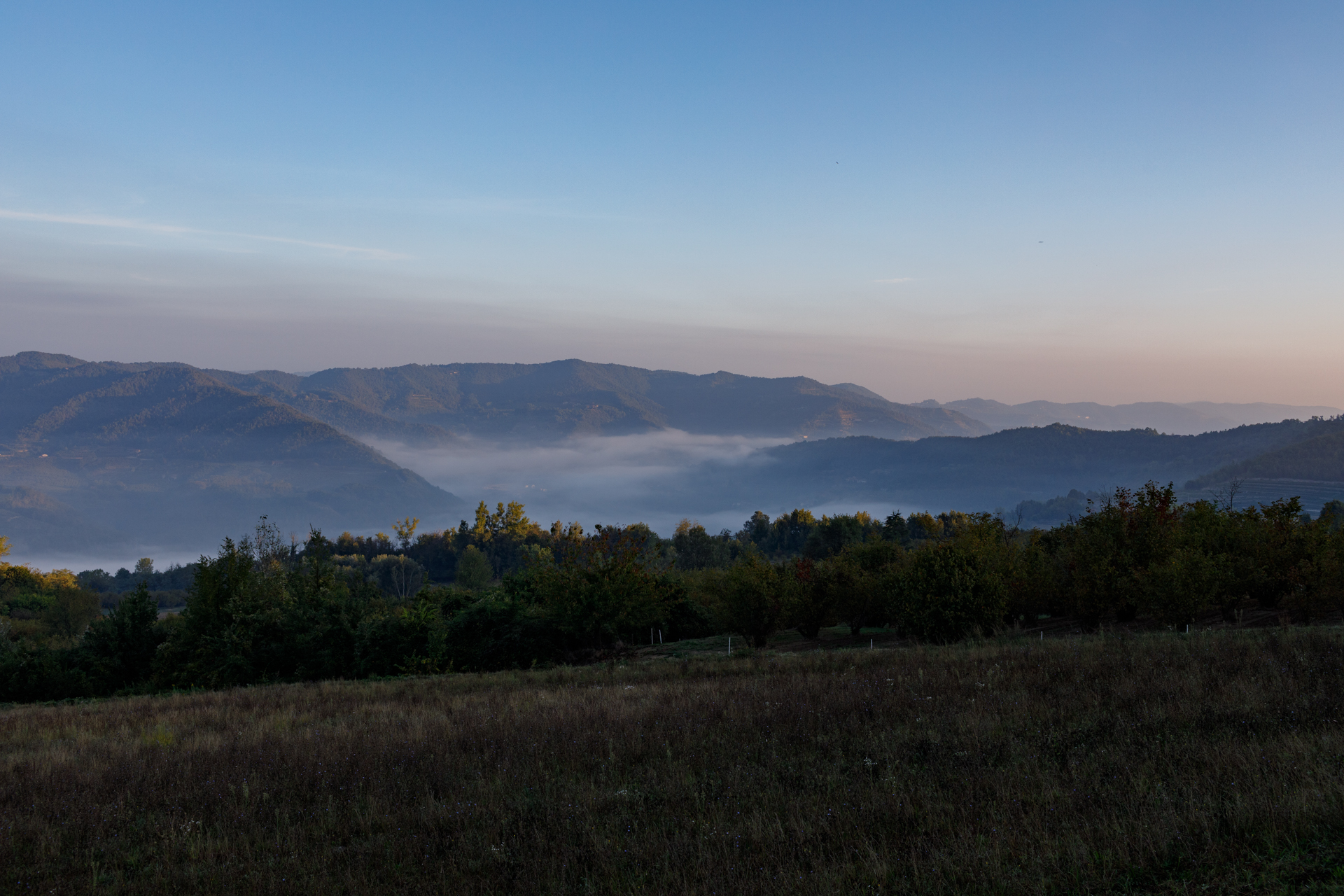
From above, you see the village as it is: a neatly arranged cluster of houses, overlooking the Bormida and Uzzone valleys without dominating them. It lies in the eastern Alta Langa area, at just over 600 metres above sea level.
A tiny settlement with only a handful of inhabitants, it retains an intimate feel. Its position is shaped by the light and the air: often clear, sometimes mellowed by the gentle wind that blows from the Ligurian coast.
Here, the stone does not weigh heavily; it is a uniting force, it provides peace and encourages you to look further.
In the village distances are reduced, noises fade away, and the pace of life slows. The houses are united by the continuous stone walls, interspersed with unexpected panoramas. Everything is restrained, in harmony with the silence.


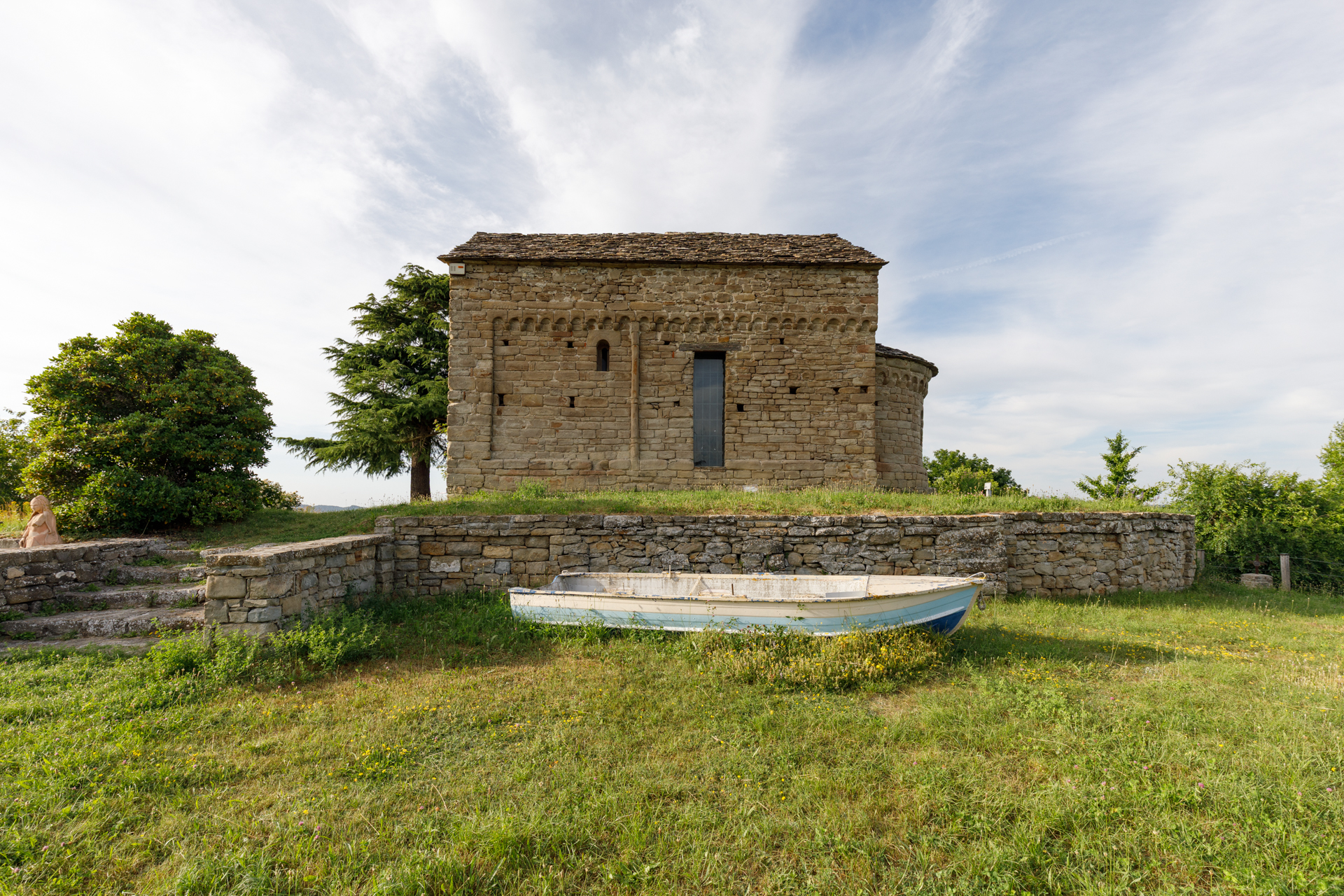
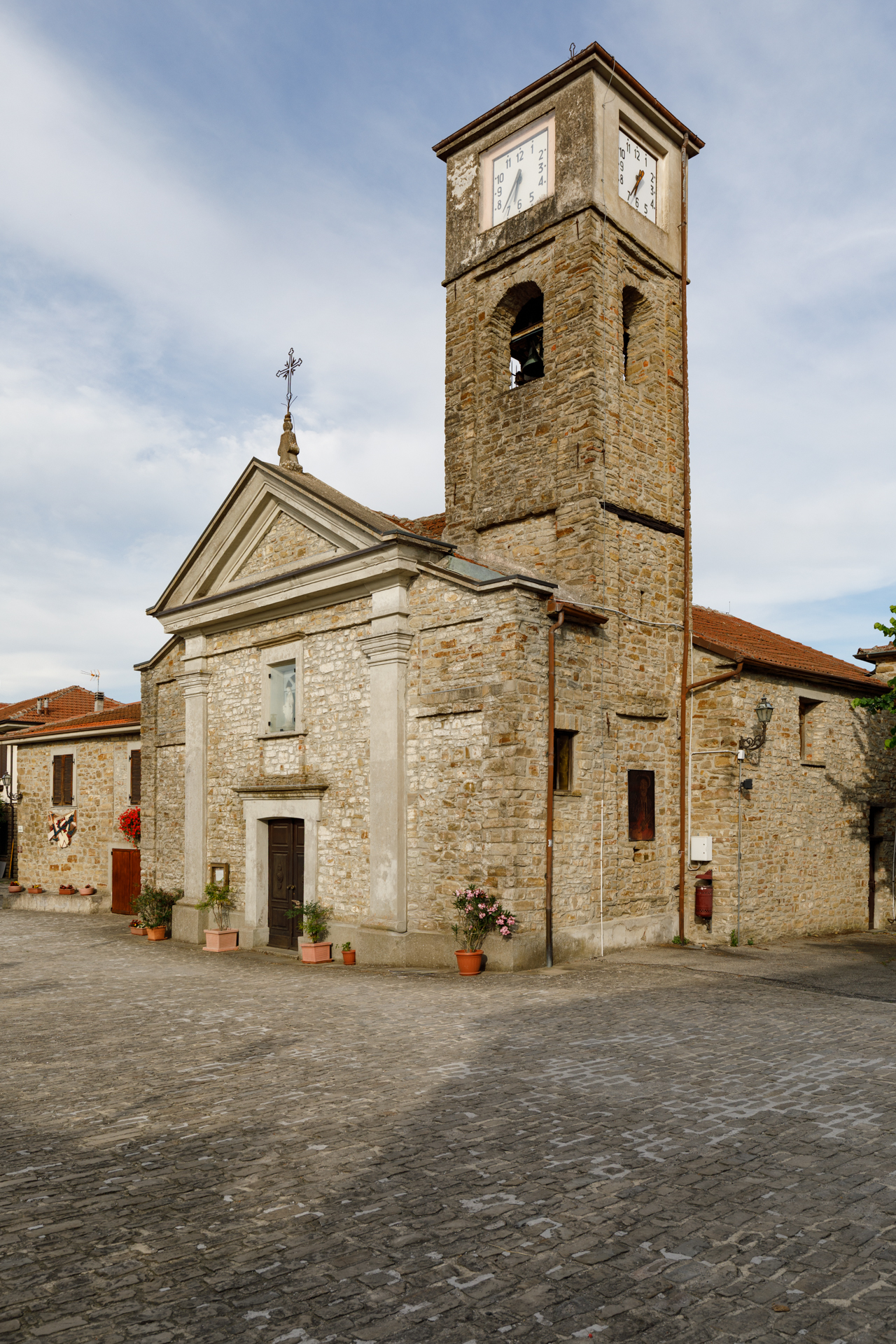
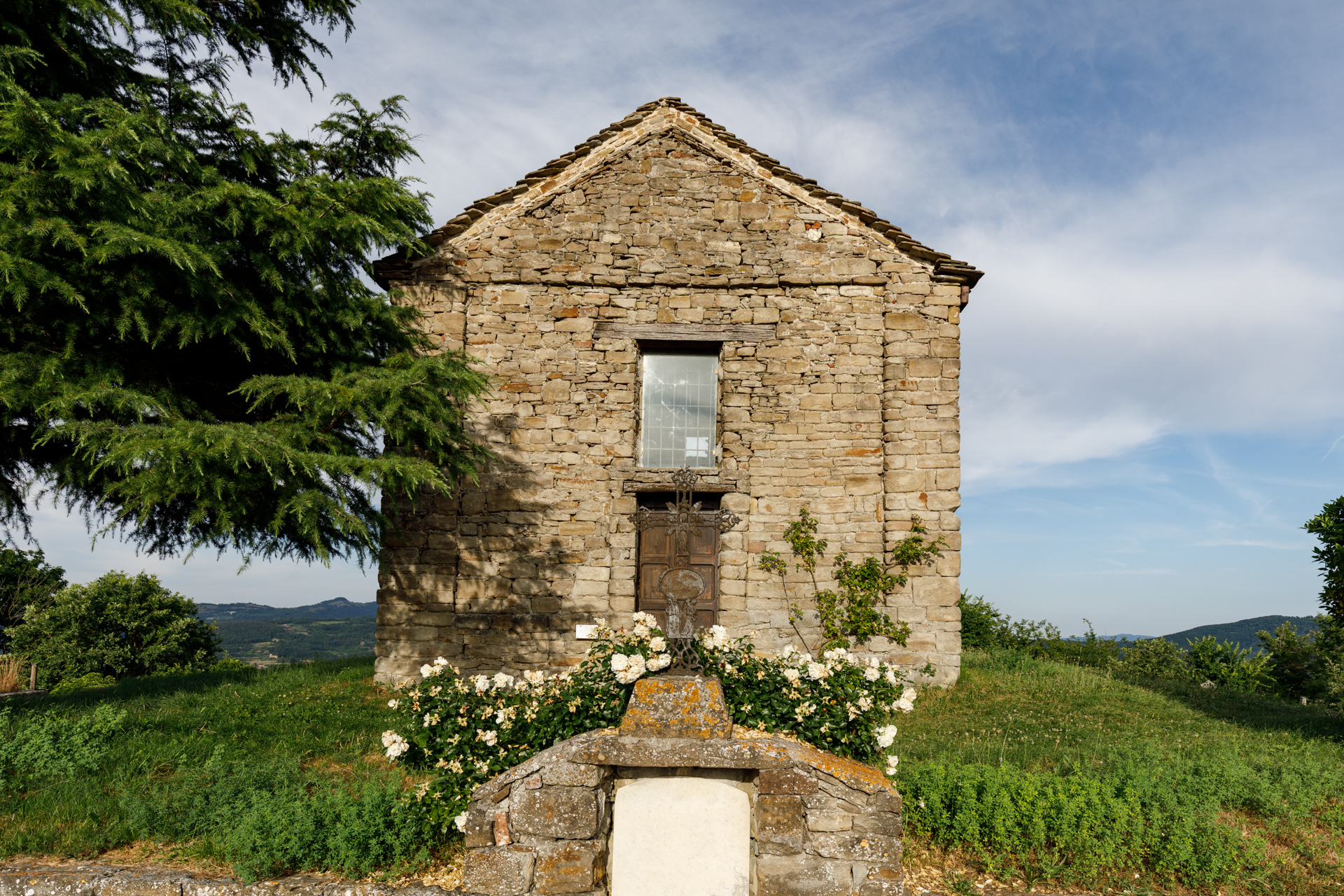
In the compact village, the church marks a fixed reference point, understated yet meaningful. Just outside the centre is the Romanesque church of San Sebastiano, a former parish church which overlooks the valleys, a place that invites you to stop and take a moment. Around the church, several stone benches look out into the distance. They are considered to be some of the most scenic and romantic places in the entire valley, a place to sit and let the landscape do the rest.
Bergolo is not simply silent: murals and art installations interact with the stone buildings, while festivals and concerts bring the village to life without disrupting the overall harmony.

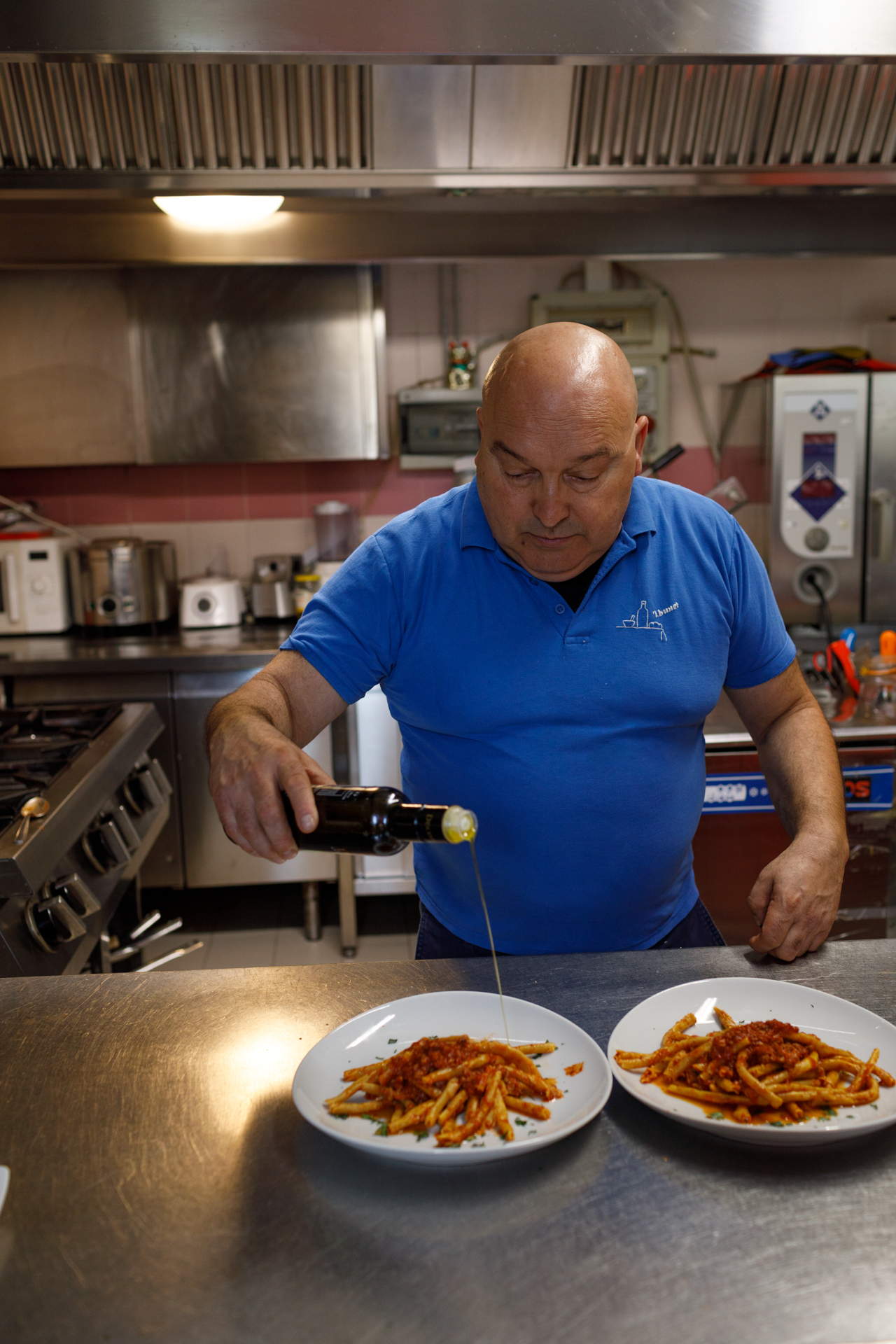
Even stopping for lunch in the local taverns follows a similar logic: authentic, simply, without fills, places which have retained their human scale.