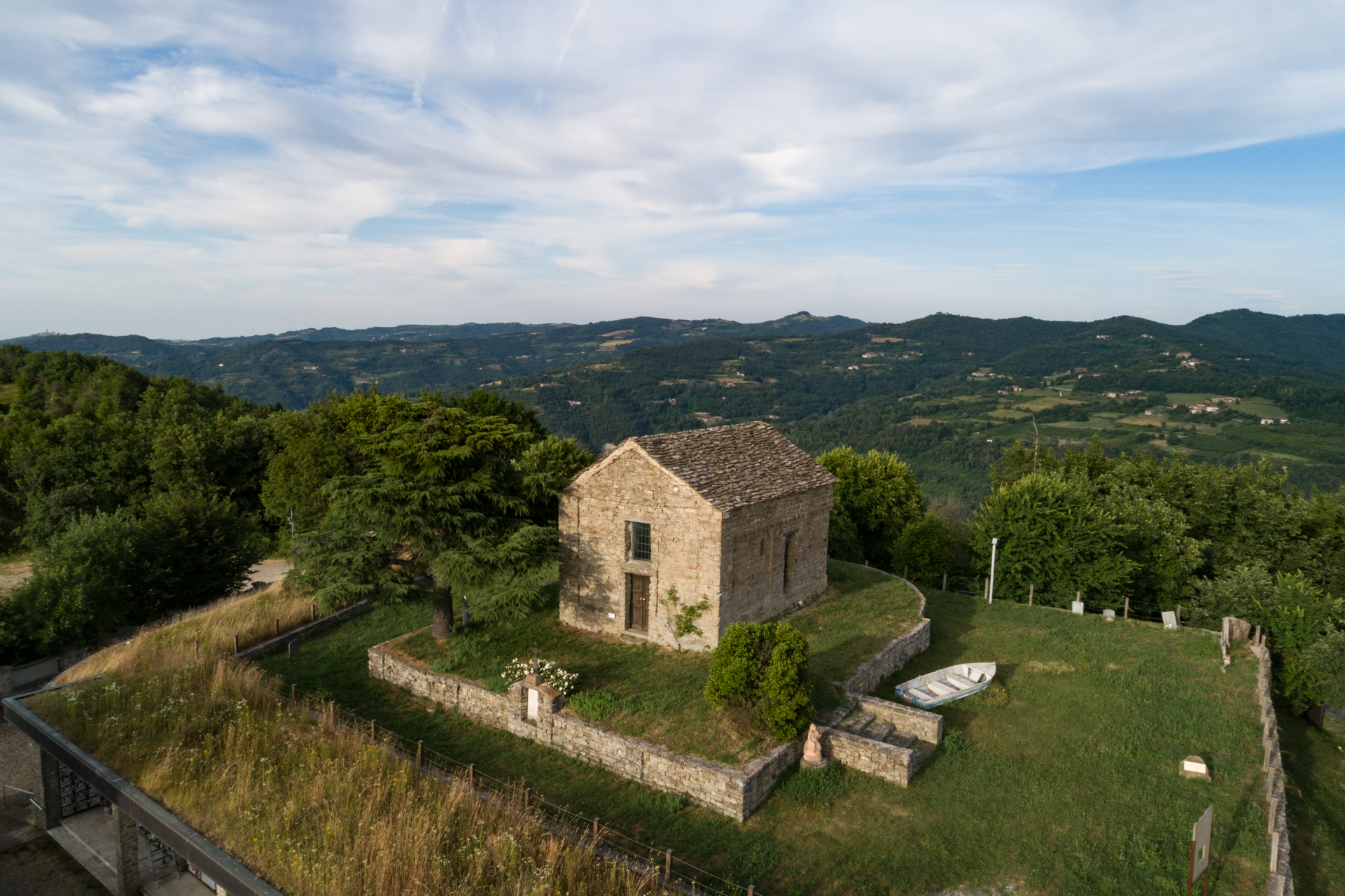
In Bergolo, stone isn't ornament. It's language. The Chapel of San Sebastiano expresses this with a simple, ancient form, close to the earth.
The Chapel of San Sebastiano is located in one of the smallest and most recognizable villages in the Bormida Valley. Bergolo is known as a stone village. Here, sandstone is used to build houses, walls, steps, and doorways. The chapel, too, was built from this material.

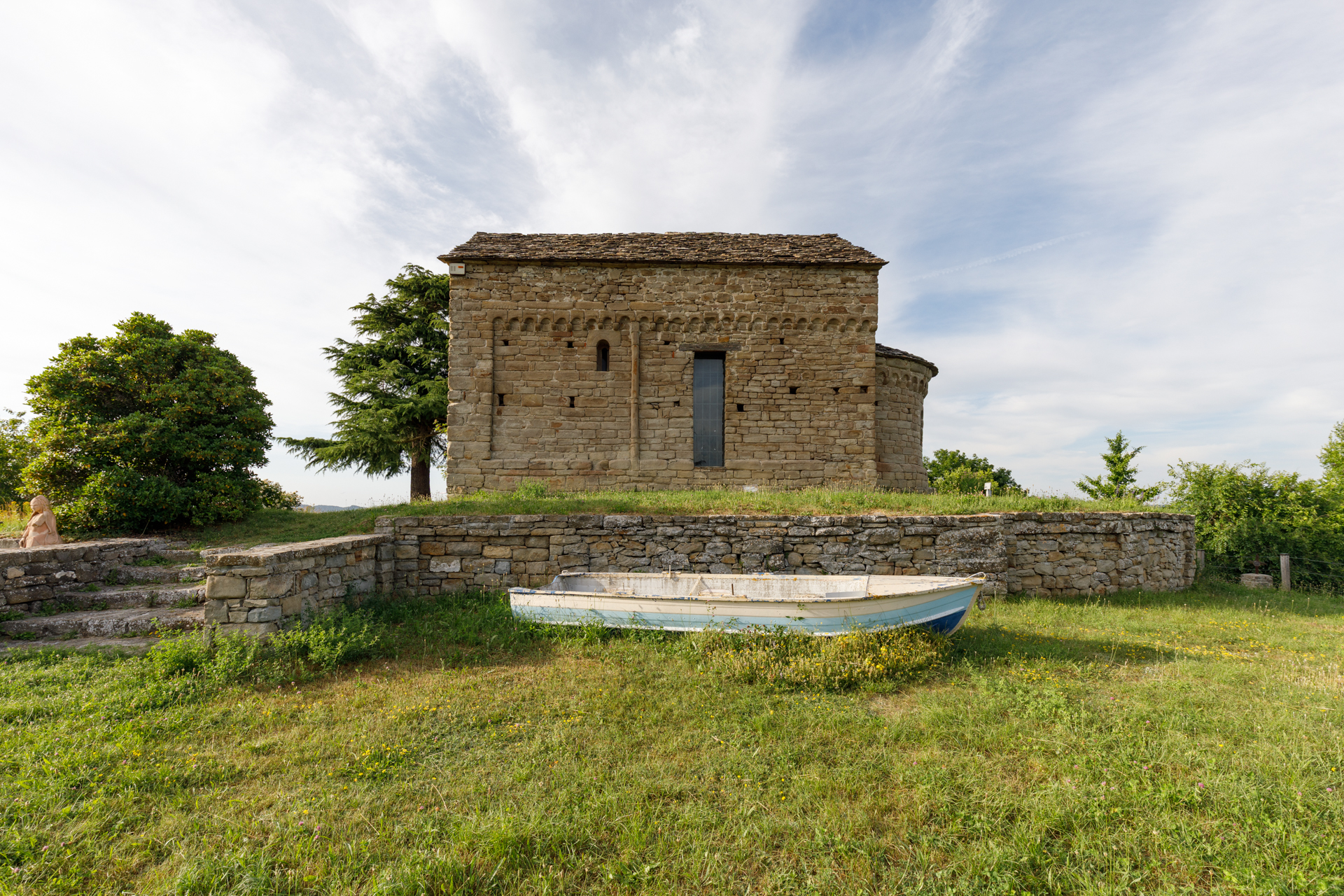
The building retains simple Romanesque forms, with a single nave and a semicircular apse decorated with hanging arches. A small but very precise presence. The MUDI data sheet dates it to a 12th-century layout and emphasizes its architectural sobriety.
There's no excess. No distracting decoration. There's a subtle architecture that brings together stone, light, and memory.
For experiential travelers, San Sebastiano is a gateway to the most intimate Bormida Valley, home to secluded parish churches, villages traversed on foot, and details that demand attention.
For those who work remotely or seek a period of concentration, Bergolo offers another reading: few noises, an open horizon, a dry, almost monastic daily dimension.
The chapel is also an invitation to better observe the built landscape.
The same stone passes from the houses to the church, from the walls to the walkways. The village and the sacred place speak the same language.

The visit may be short, but it leaves a clear mark.
A pause before the façade. A turn around the apse. The pace slowing on the cobblestones.
Bergolo doesn't work on effect. He works on the permanence of the gaze.
San Sebastiano, with its compact and silent architecture, is one of the places where this identity becomes visible.
Here, the stone doesn't tell the past. It still holds it close.