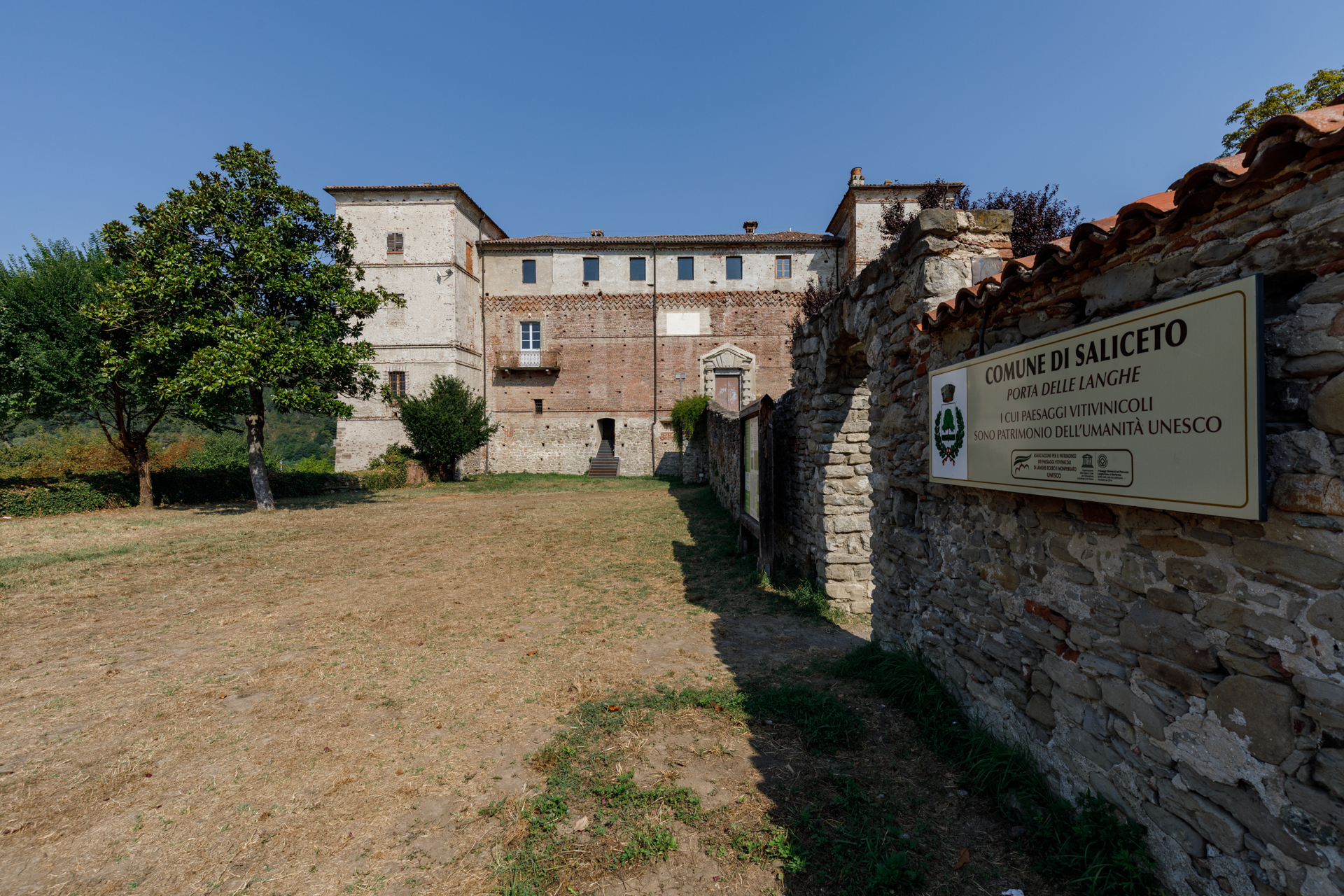
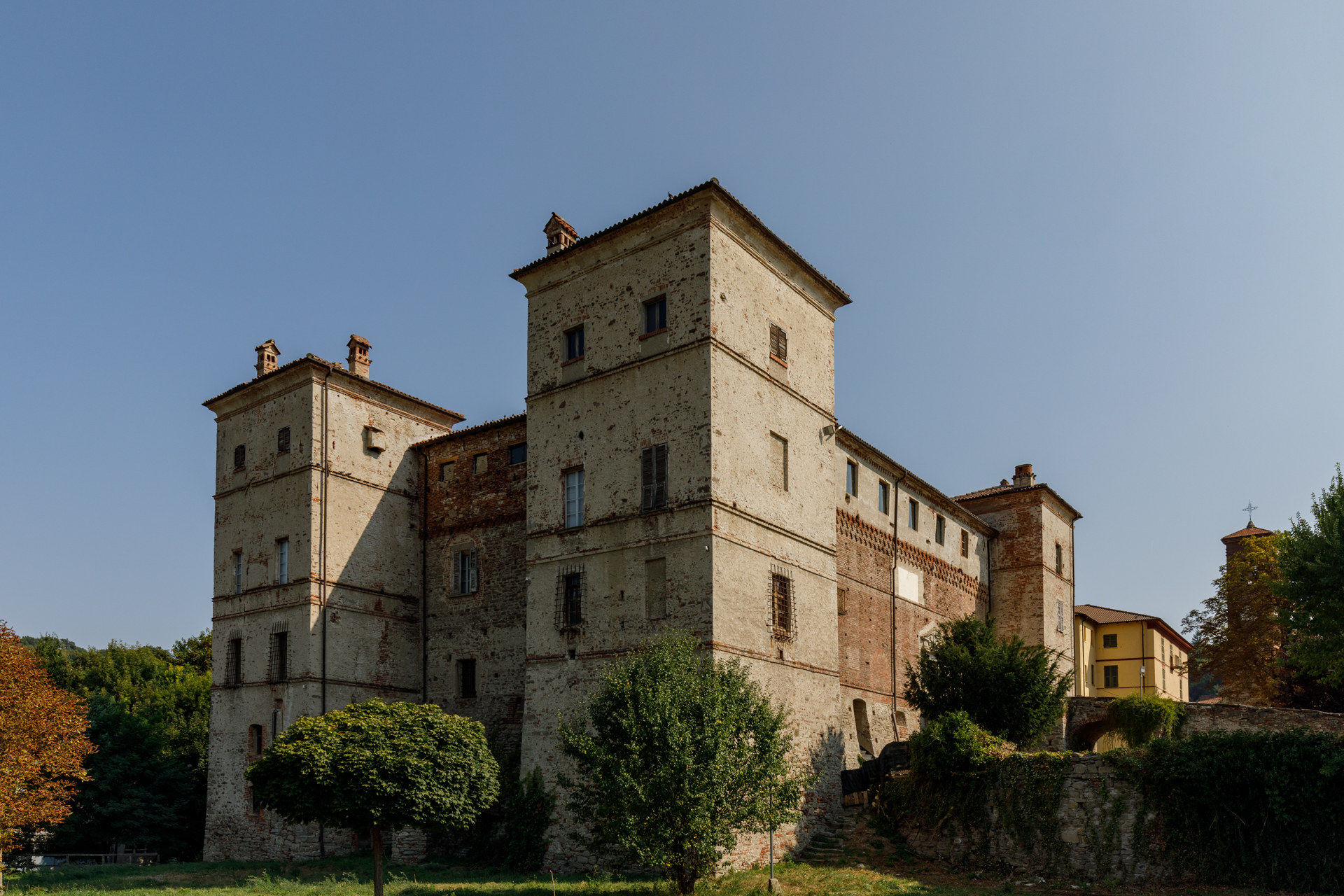
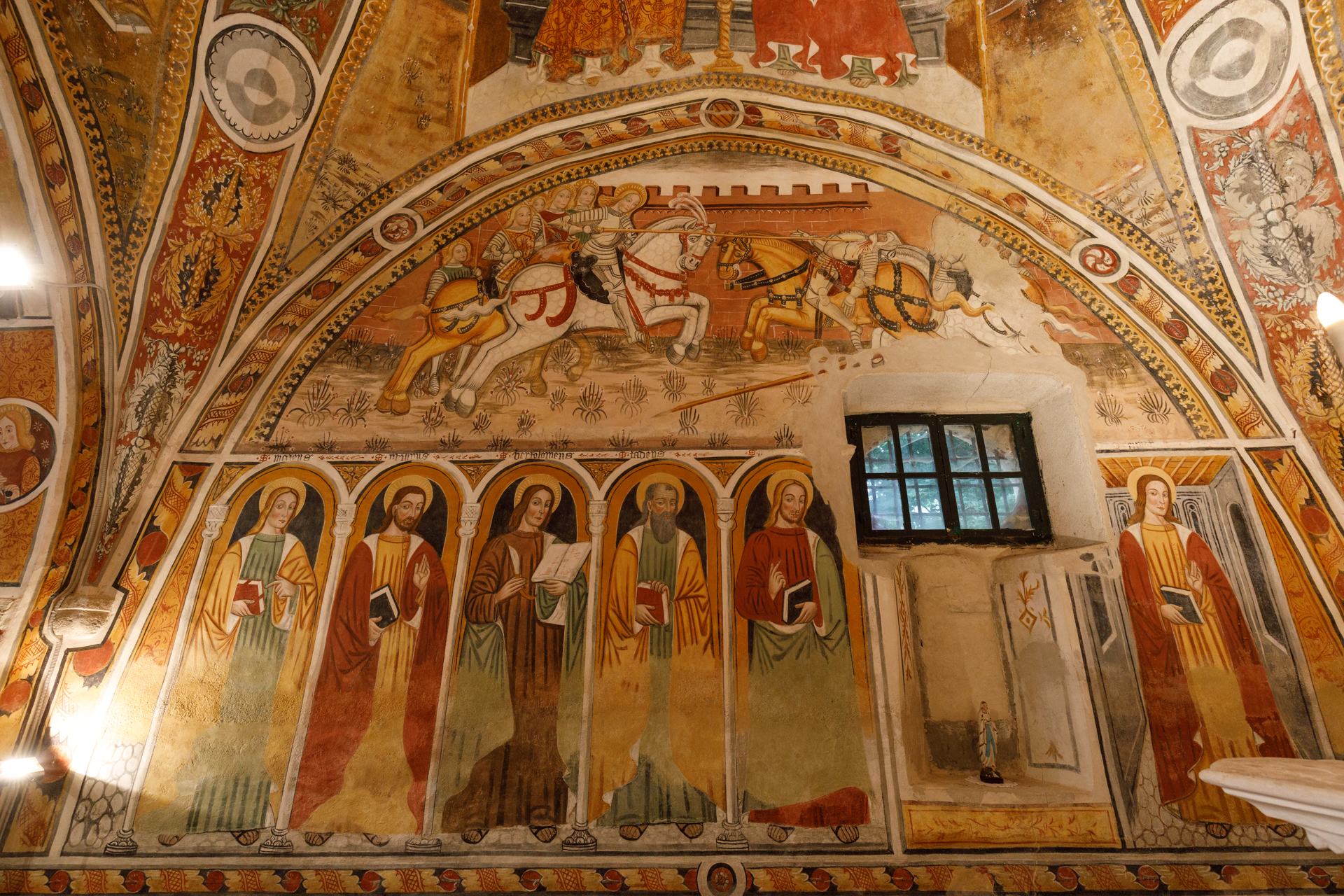
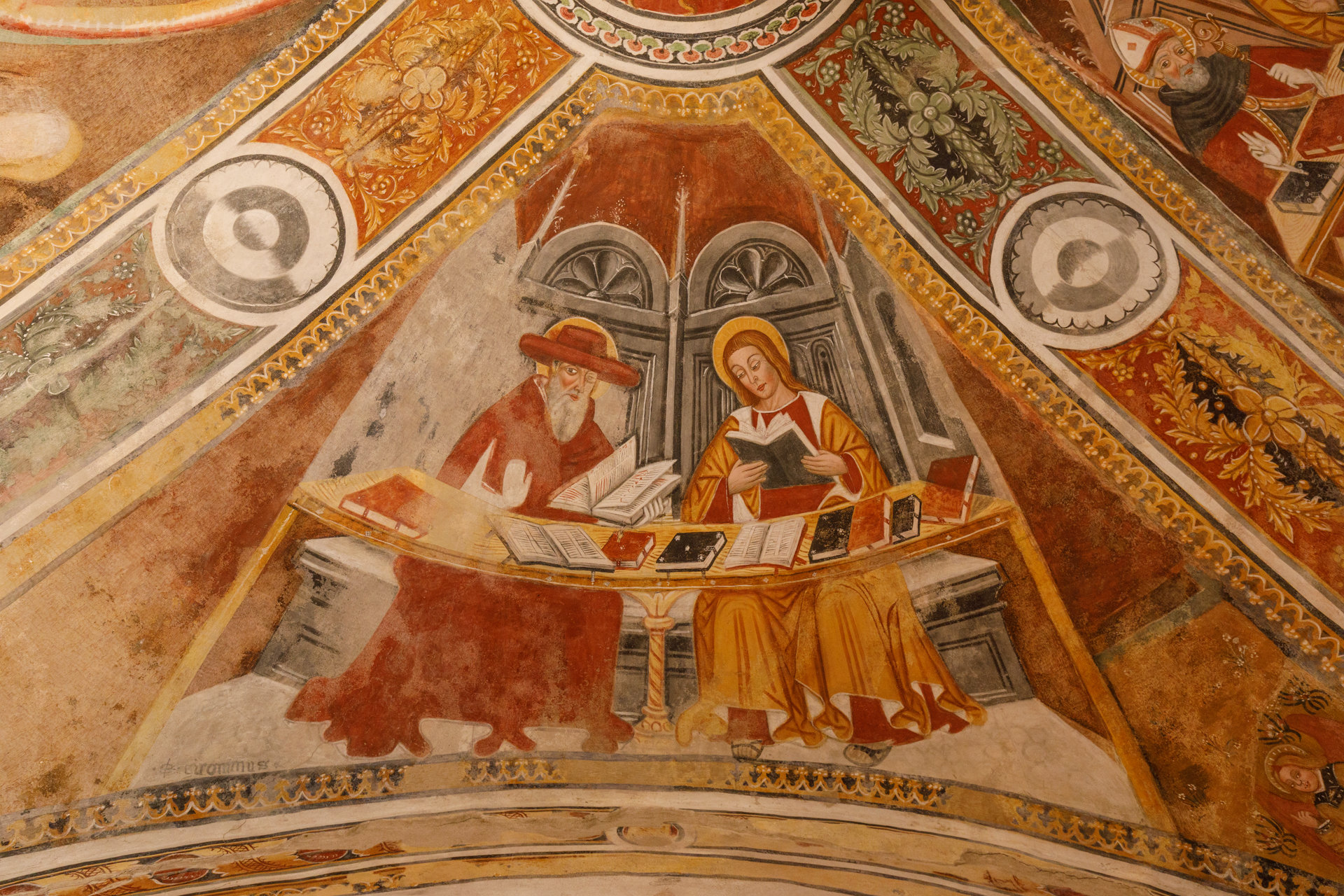
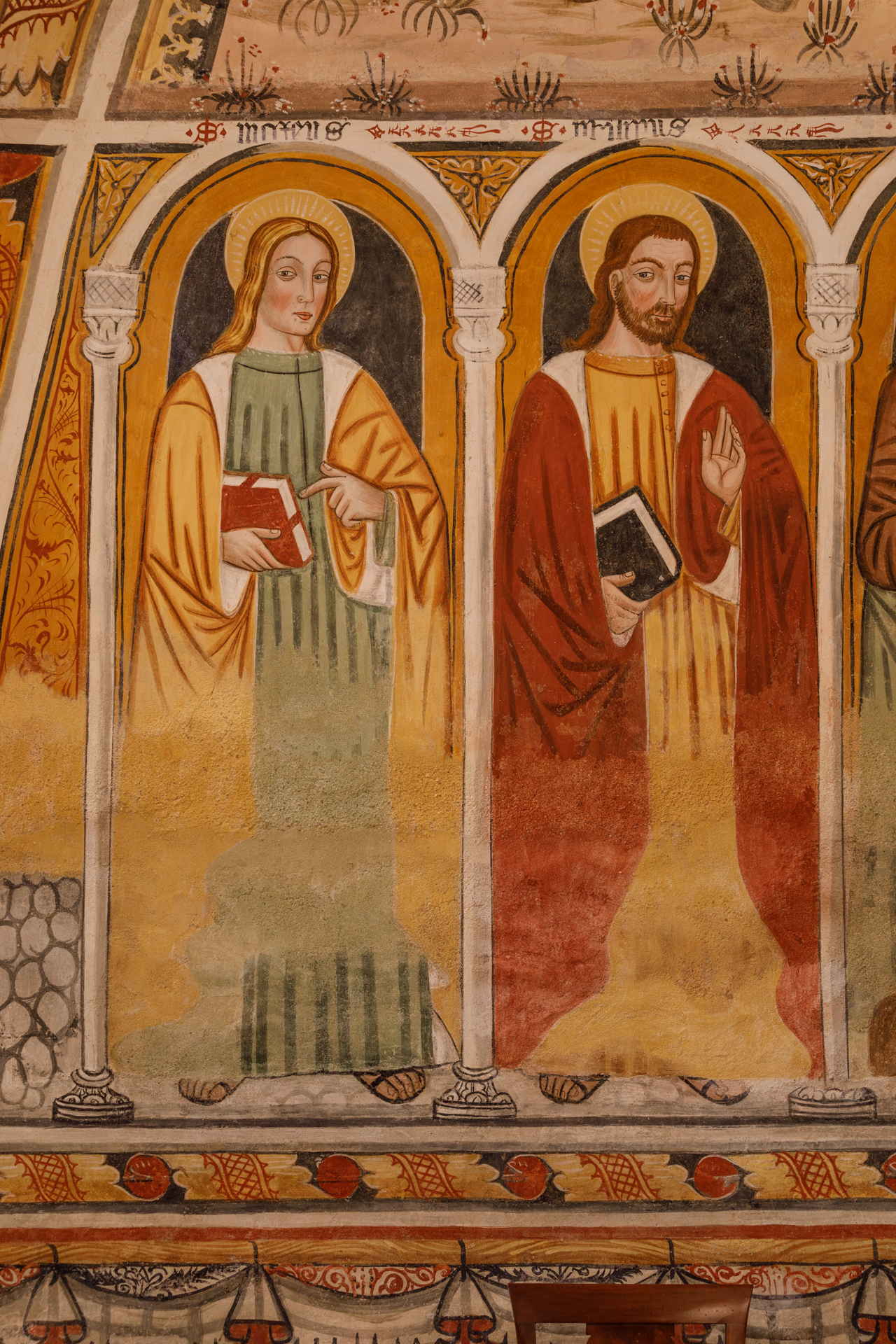
In Saliceto, stone doesn't just build. It tells a story. The castle and the Church of San Lorenzo form a compact center, inhabited by signs, proportions, sculpted figures, and the silence of the village.
The Castle and the Church of San Lorenzo are among the most significant places in the cultural Bormida Valley.
They are located in the heart of Saliceto, close together, almost in dialogue. On one side, the civil and defensive presence of the castle. On the other, the sacred dimension of the church, with its façade rich in detail and symbolism.


Here the heritage does not appear distant.
It remains within the life of the village. Next to the houses, the streets, the square.
The façade should be observed slowly. Animals, figures, decorative motifs, and religious symbols emerge from the surface like fragments of an older tale. Not everything is immediately apparent. Some details require time, the right lighting, and attention.
The castle adds depth to the visit.
With its solid mass and its position in the urban fabric, it conveys the sense of a village that has spanned centuries of passages, borders, families, devotions, and daily life.
For the experiential traveler, Saliceto is a stop to read about rather than to look at.
It's not enough to arrive and take pictures. You have to stop. Follow the lines of the stone. Look for the carvings. Enter the intimate rhythm of the historic center.
For those who imagine the Bormida Valley as a place to live, even if only temporarily, this place offers a concrete value: living close to an authentic heritage, not separated from everyday life.
A heritage that does not become scenery, but presence.


Saliceto holds a more enigmatic, more stratified valley.
A valley where art, architecture, and memory need no emphasis. They remain there, in the material, ready to reveal themselves to those who know how to slow down.
In Saliceto, every engraved detail seems to require time. And it conveys it profoundly.