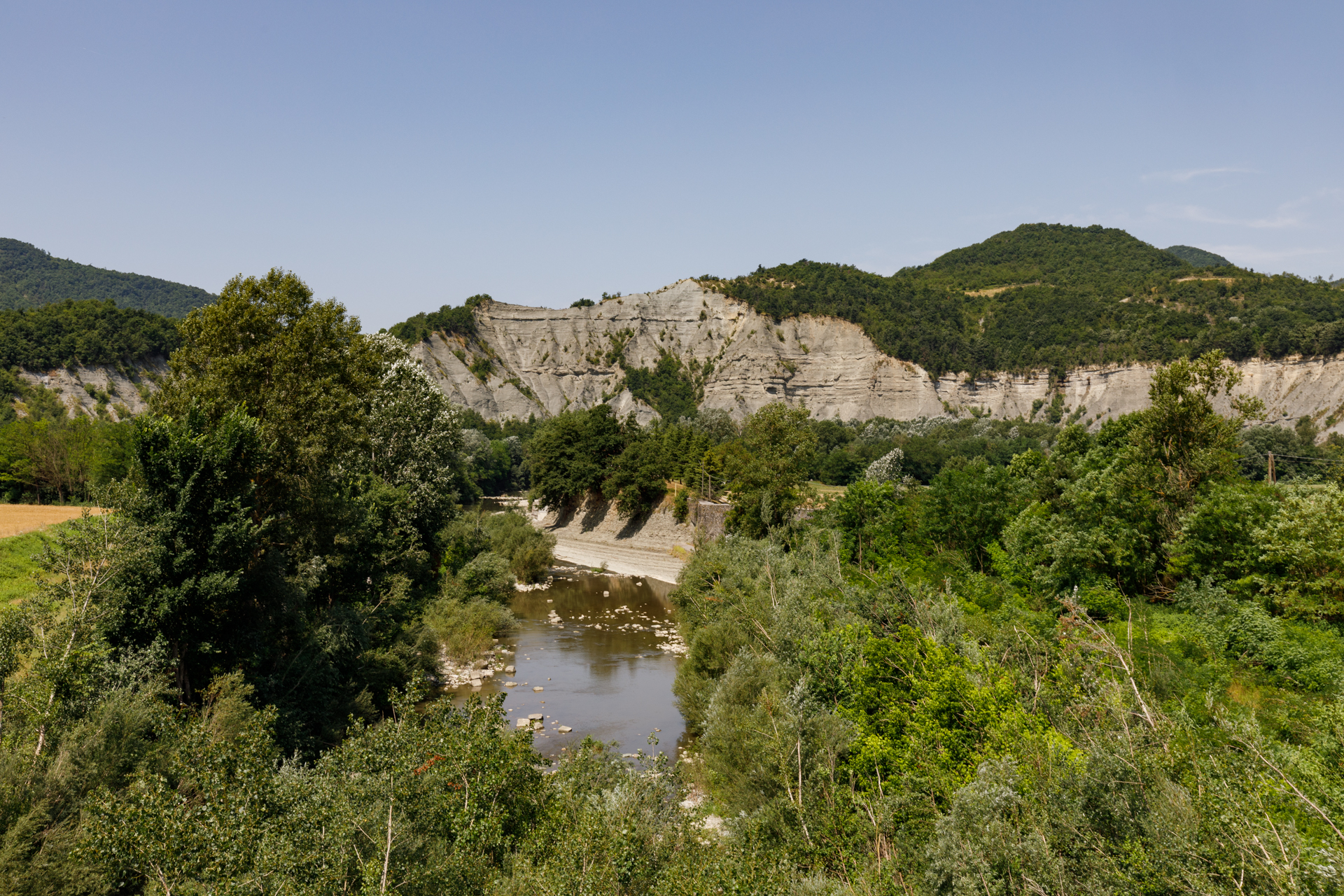
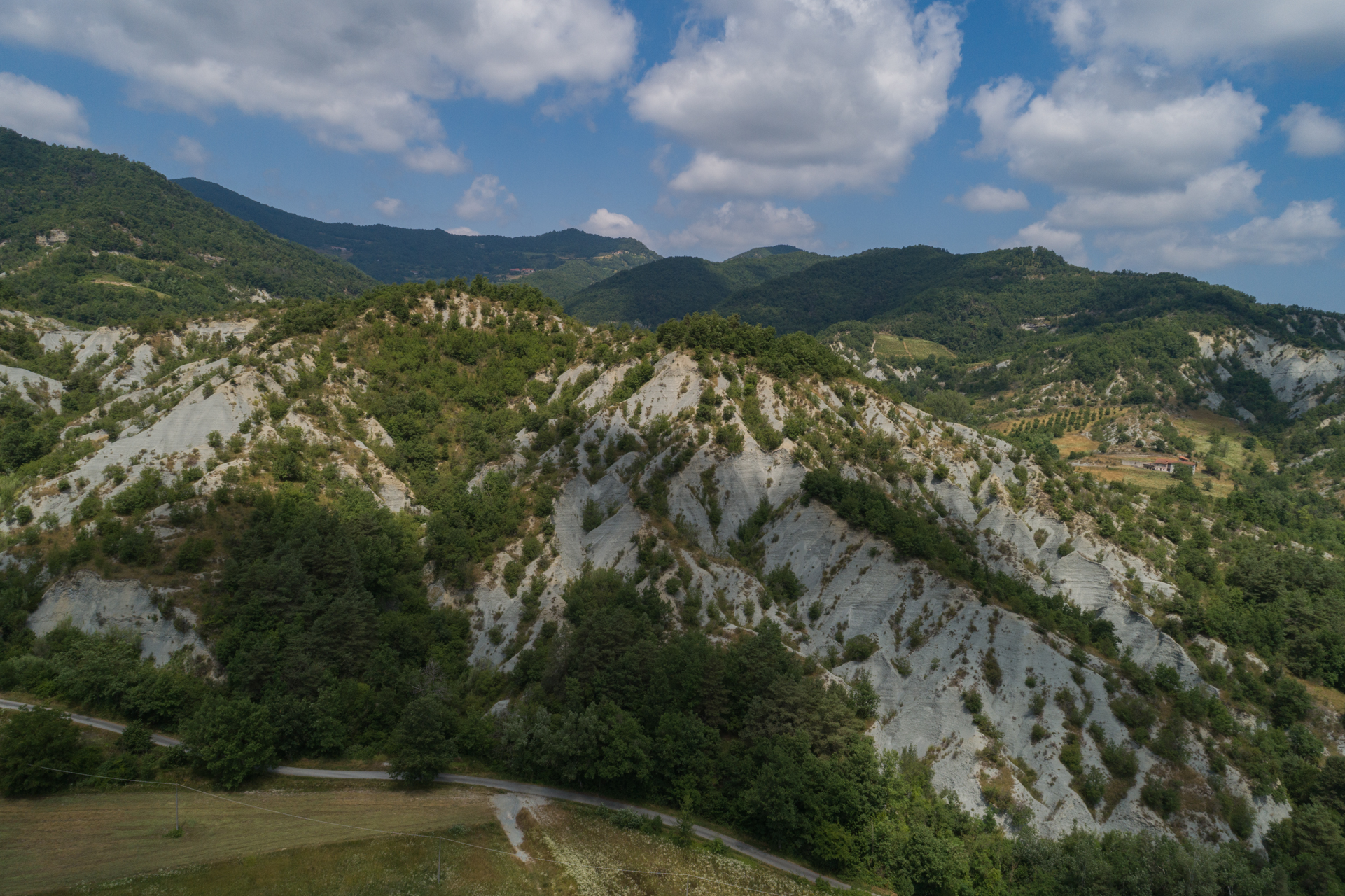
Between Spigno, Merana, and Mombaldone, the land changes shape. The hills become bare, scarred by water and wind. The gullies open up an unexpected landscape in the southernmost part of the Bormida Valley.
The gullies are one of the most unique landscapes in the valley.
Here, nature shows its most fragile and dynamic side. Rain slowly erodes the clay. The ground bends, fractures, and changes color throughout the day.

The result is an almost lunar landscape, but profoundly Mediterranean in its light and shapes.
Walking along these hills you get a different feeling compared to the more wooded areas of the Alta Langa.
The view opens. The profiles become stark, essential. The vegetation thins out, allowing the earth's texture to emerge.
The gullies tell the story of a lesser-known Val Bormida.
More bitter.
More geological.
Quieter.
For those who love photography, slow hiking, and landscape observation, this is one of the most interesting areas in the valley. The light constantly changes the perception of the reliefs. In the morning, the surfaces appear soft. In the late afternoon, they become sharp, almost sculptural.
Even the relationship with time takes on another dimension here.
Continued erosion reminds us that the landscape isn't static. It slowly changes, season after season.
For experiential travelers and those seeking authentic immersion in nature, the badlands offer something rare: an environment that has not been tamed for tourism.

There remain places to be crossed with respect, without noise.
The proximity of small villages, secondary roads and such open landscapes creates a very particular balance.
In just a few minutes you go from a stone-built town to an almost mineral-like landscape.
This alternation is one of the most profound forces of the Bormida Valley.
The ability to change face without losing coherence.
In the badlands, the earth still seems to be in motion. And the landscape changes with the light.